Why Do Sa'd Victims Develop A Sex Addiction

Maybe you’ve heard the phrase “sex addiction” and pictured a celebrity scandal or a punchline. But for many people who’ve survived sexual assault, compulsive sex isn’t about h...

Maybe you’ve heard the phrase “sex addiction” and pictured a celebrity scandal or a punchline. But for many people who’ve survived sexual assault, compulsive sex isn’t about having a wild time. It’s a confusing, exhausting loop that can feel impossible to break.
And no, this doesn’t happen to every survivor. Trauma responses are personal: some people shut down sexually, while others swing the other way. Both make sense when you understand what trauma does to a nervous system.
First, a gentle reframe
“Sex addiction” isn’t an official diagnosis in the DSM-5, the big psychiatry manual. Many clinicians prefer terms like compulsive sexual behavior or trauma-driven sexual coping. The label matters less than the pattern: sex starts feeling less like a choice and more like a pressure valve.
Must Read
Think of it like scratching an itch that never stops. At first, the scratch brings relief. Soon, the skin is raw, and you’re scratching anyway.
Trauma leaves the nervous system hungry for relief
After an assault, the body can get stuck in survival mode. Your brain is looking for anything that turns down the alarm. Sex can flood the system with dopamine, oxytocin, and endorphins — a temporary chemical vacation.
That doesn’t mean the survivor is weak or dramatic. It means their brain found something that works, at least for a few minutes. The problem is the bill always comes due.
Control feels safer than chaos
Sexual assault is often about power being taken away. Later, initiating sex, setting the pace, or choosing partners can feel like taking power back. “If I’m the one in charge,” the brain whispers, “no one can hurt me like that again.”
It’s a clever survival trick, but it’s also a trap. Because no amount of control can fully rewrite what happened.
The brain tries to rewrite the ending
Sometimes survivors replay similar situations without realizing it. They might seek rough sex, risky hookups, or partners who feel emotionally unavailable. The unconscious hope is: This time, I’ll make it turn out differently.
 What Is Sex Addiction? - Susan Zola
It’s like watching the same scary movie again and again, hoping the ending changes. It rarely does. Instead, it can add fresh layers of shame and confusion.
Numbing beats feeling
Trauma memories don’t always arrive as clear pictures. They can show up as anxiety, rage, numbness, or a heavy fog. Compulsive sex can act like a blanket thrown over all of it.
For a little while, there’s no past, no fear, no grief. Just sensation. Then the fog lifts, and everything is still there — sometimes louder.
Shame is gasoline
Here’s the cruel part: the behavior often brings shame. Shame says, “You’re disgusting. You’re broken. Don’t tell anyone.” That secrecy makes the cycle stronger.
So the person reaches for sex again to escape the shame. It’s not a moral failure. It’s a pain loop wearing a disguise.
Intimacy gets tangled up with survival
For some survivors, sex becomes the only language they trust for closeness. They may confuse being wanted with being safe, or being used with being loved. A hookup can feel like proof they matter — for an hour.
But real intimacy asks for vulnerability, and vulnerability can feel dangerous. So they may choose sex that keeps one foot out the door.
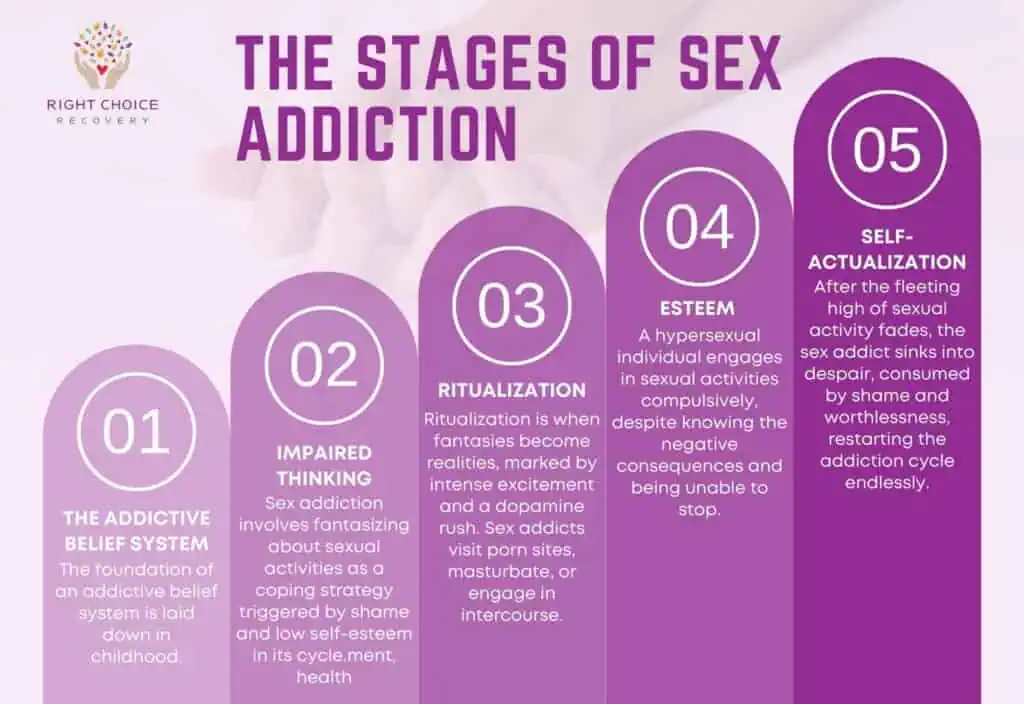 Sex Addiction: Symptoms, Causes, Effects and Treatment
It’s not about libido
A high sex drive isn’t the issue. The issue is whether sex feels chosen, nourishing, and boundaried — or driven, secret, and followed by regret. If someone keeps saying “never again” and then doing it again, that’s a clue, not a character flaw.
What helps, really
Healing usually isn’t about white-knuckling your way to zero sex. It’s about building safety in your body, learning your triggers, and finding ways to feel close without losing yourself. A trauma-informed therapist can help untangle the knot without adding more shame.
Why should you care?
Because shame thrives in silence, and silence keeps people stuck. If we keep calling this a “dirty habit” or a “lack of willpower,” we miss the trauma underneath. That’s like yelling at a smoke alarm instead of checking the fire.
You probably know someone who’s struggling. Maybe it’s a friend who jokes about their chaotic hookups. Maybe it’s you, reading this at 2 a.m. and wondering why you can’t just stop.
Care looks simple, but it’s powerful. Don’t shame or diagnose; do listen. And if someone wants help, point them toward a trauma-informed therapist, not a lecture.
Recovery doesn’t mean never having sex again. It means learning that sex can be a choice, not a compulsion. It means safety, boundaries, and pleasure without the hangover of shame.
That’s worth caring about — for survivors, for the people who love them, and for a world that still whispers too much shame around trauma.
