How To Clean A Lennox Furnace Flame Sensor

Last January, my neighbor Dave stood in his basement staring at his Lennox furnace like it had personally insulted him. It would click, whoosh, run for five seconds, then quit...

Last January, my neighbor Dave stood in his basement staring at his Lennox furnace like it had personally insulted him. It would click, whoosh, run for five seconds, then quit. He called it “the world’s most expensive candle.”
I asked if he had cleaned the flame sensor. He blinked twice and said, “The what?” That tiny metal rod is the furnace’s way of asking, Is there actually fire in here?
When it gets coated with dust, carbon, or oxidation, the answer becomes a confused shrug. The control board then shuts the gas off to keep your house from becoming a science experiment. Cleaning it is genuinely DIY-friendly, as long as you respect the machine and your limits.
Must Read
Why a dirty flame sensor ruins your morning
A flame sensor is not there to make heat. It is there to prove heat. If it cannot detect a flame, the furnace assumes gas is flowing without ignition, which is dangerous.
So it locks out. You might notice short cycling, a blinking error code, or a furnace that fires up and dies before the blower gets going.
It’s usually just a dirty rod. Lennox furnaces use the same basic idea as most brands, though the sensor location and mounting can vary.
Some sit near the burners; others hide behind an access panel. Your owner’s manual is your friend here, not a random YouTube video with dubstep.
Safety first, hero
Before you touch anything, turn the thermostat to off. Then kill power at the furnace switch or breaker. If you want extra caution, shut off the gas valve too.
Wait a few minutes. Furnaces can have sharp edges, hot surfaces, and electrical components that hold a charge. If you smell gas, stop and call a professional immediately.
Pull connectors gently by the plug, not the wire, and don’t yank like you’re starting a lawnmower. Yes, I’m talking to you.
What you’ll need
Gather a 1/4-inch nut driver or screwdriver, fine steel wool or emery cloth, a soft cloth, a flashlight, and gloves. A phone photo helps you remember the setup.
 Cleaning lennox g43 g51 g61 flame sensor the easy way - YouTube
Avoid sandpaper; it can leave grit or scratch the rod. Fine steel wool is the gentle, boring hero of this job.
Finding the flame sensor on a Lennox furnace
With power off, open the burner compartment. Look for a slender metal rod with a white ceramic base and a single wire attached. It often sits near the igniter, but not always.
The igniter may glow; the flame sensor usually does not. If you’re unsure which is which, stop and check your model’s diagram. Breaking an igniter turns a ten-minute cleaning into a hundred-dollar repair.
Cleaning it without turning it into a science project
Remove the mounting screw and slide the sensor out carefully. Wipe the ceramic base with a dry cloth. Don’t soak, spray, or dunk it in water.
Clean the metal rod with fine steel wool until it looks shiny again. Use light pressure. Do not bend the rod, because its position in the flame matters.
If the rod is cracked, corroded, or worn down, replace it. Reinstall the sensor in the same position. Tighten it snugly, not like a stubborn pickle jar.
Reconnect the wire.
Putting it back and testing
Restore power and set the thermostat to heat. Watch the furnace through one full cycle. You want the igniter to glow, the burners to light, and the flame to stay on.
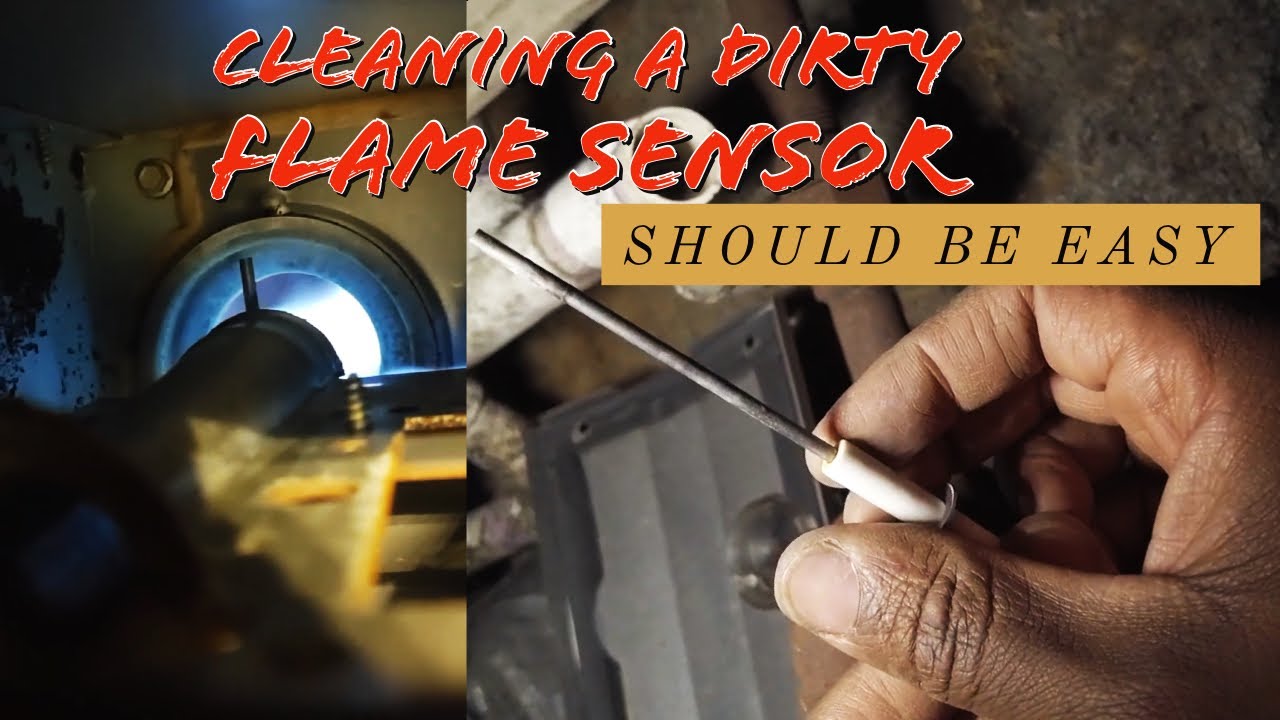 Lennox Furnace Flame Sensor Cleaning | Gas Furnace
If the furnace still shuts off after a few seconds, the sensor may be failing, misaligned, or the control board may have another issue. The sensor may also need repositioning so the flame covers it.
That’s a job for someone comfortable working with live voltage and gas. If that’s not you, call a tech.
When to call a pro
Call a professional if you see a cracked ceramic insulator, a corroded rod, repeated lockouts, or any gas smell. Also call if your CO detector goes off. Do not treat that as a suggestion.
If two cleanings don’t fix it, the issue may be the board, grounding, or gas pressure. That’s beyond a steel wool pep talk.
Keep it clean, keep it boring
Once a year, add flame sensor cleaning to your furnace maintenance list. Change the filter regularly, keep the area clear, and schedule a professional tune-up. A boring furnace is a beautiful thing.
It wakes up, makes heat, and shuts up.
Dave cleaned his sensor in fifteen minutes, and the furnace stayed on. He bought pizza with the service-call money.
That’s the kind of victory I can support.
