Drive From Montreal To Halifax Nova Scotia

Point your car east on Autoroute 20, and the road starts to feel like a long exhale. Montreal shrinks in the rearview, the St. Lawrence widens, and suddenly you’re not running...
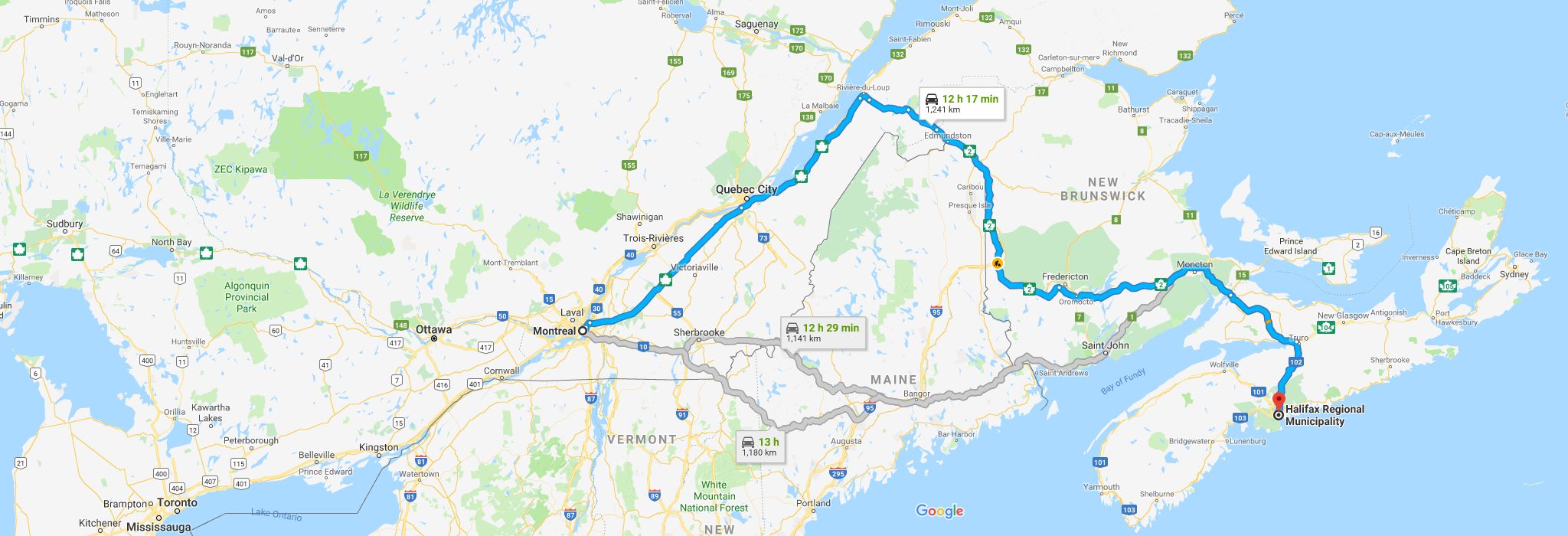
Point your car east on Autoroute 20, and the road starts to feel like a long exhale. Montreal shrinks in the rearview, the St. Lawrence widens, and suddenly you’re not running errands anymore. You’re going to Halifax.
The drive covers roughly 1,240 kilometres—about 770 miles—from Montreal to Halifax. Nonstop, it takes 12 to 13 hours, but why rush? This route is best broken into two or three easy days.
The Route, Roughly
Most drivers follow Autoroute 20 east to Autoroute 85, then pick up the Trans-Canada Highway through New Brunswick. You’ll pass Quebec City, Rivière-du-Loup, Edmundston, Fredericton, Moncton, and Truro. Then Halifax appears, smelling of salt and harbour fog.
Must Read
You could detour through Maine, but the Canadian route is simpler and more scenic in its own quiet way. It also keeps you in one country, one currency, and one long conversation with the road.
Quebec: The Warm-Up
Leave Montreal early if you can. Traffic around Quebec City can be sticky, but the old walled city is worth a coffee stop. Grab a croissant in Petit-Champlain and stretch your legs before the long push east.
Rivière-du-Loup is a natural first-night stop. The sunset over the St. Lawrence is absurdly pretty. If you continue, the highway climbs into the Témiscouata region, where lakes flash between trees and moose signs suddenly feel very serious.
Do not drive at dusk or dark if you can avoid it, especially through wooded stretches. Moose are huge, unpredictable, and unimpressed by your headlights. A motel bed in Rivière-du-Loup beats a close encounter every time.
New Brunswick: The Long Middle
Edmundston feels like a friendly handshake into New Brunswick. From there, the Trans-Canada rolls through forests, potato fields, and small towns with Tim Hortons signs glowing like beacons.
Fredericton makes a fine lunch stop. The riverfront is calm, the craft beer scene is lively, and the city has a low-key charm that sneaks up on you. Moncton is another two hours or so, and it’s a good base for exploring the Bay of Fundy.
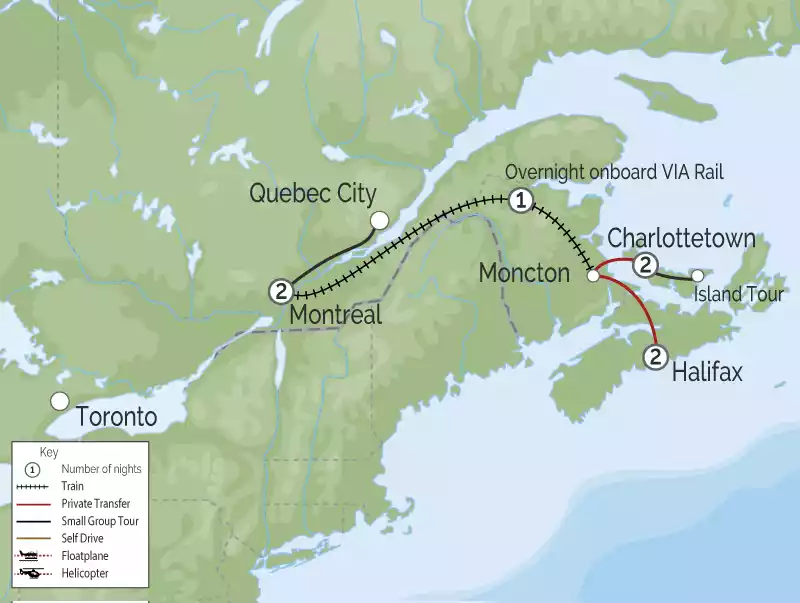 Atlantic Maritimes Explorer by Train | Canada Rail Vacations
If you have time, detour to Hopewell Rocks near Moncton. The tides there are among the highest in the world. You can walk on the ocean floor at low tide, then watch the same spot fill with water hours later.
From Moncton, the road slides into Nova Scotia. You’ll pay a small toll on the Cobequid Pass, then cruise toward Truro. Halifax is only about an hour beyond that, and the anticipation starts to hum.
Halifax Arrival
Halifax greets you with hills, harbour air, and a downtown that rewards walking. Drop your bags, then head to the waterfront. The boardwalk is busy in summer, but it’s busy in a happy, ice-cream-cone way.
Climb Citadel Hill for the view, wander the Public Gardens, and duck into the Maritime Museum of the Atlantic. The Titanic connection is haunting and beautifully curated. Later, order a donair—Halifax’s official food—and decide whether you love it or fear it.
Garlic fingers, lobster rolls, and Alexander Keith’s brewery are all part of the local ritual. Fun fact: Halifax is closer to Dublin than to Vancouver. You’ve driven east, but you’ve also landed somewhere that feels pleasantly far away.
Practical Tips for the Road
Check your tires, oil, and wipers before leaving. Download offline maps for Quebec and New Brunswick, because cell service can vanish between towns. Pack snacks, water, and a playlist that can survive repeat listens.
 Montreal to halifax train route on the VIA Rail Ocean train | Train
Gas up before long rural stretches, and take a break every two hours. Speed limits are in kilometres per hour, and radar traps are common. Summer accommodations fill fast, so book ahead in Halifax and Moncton.
Late spring through early fall is the sweet spot. Fall colours are gorgeous, especially if you continue to Cape Breton. Winter driving can be snowy, icy, and not for the faint of heart, so bring layers, cash for small stops, and patience for construction.
Budget-wise, gas might run $150 to $200 depending on your car. Motels and Airbnbs vary widely, but $120 to $250 a night is normal in tourist season. Add food, coffee, and a few detours, and you’re looking at a comfortable mini-vacation.
Why the Drive Stays With You
The Montreal-to-Halifax drive isn’t just about arriving. It’s about the radio fading between French and English, the smell of pine, the first glimpse of the Atlantic. It’s about small towns and big skies and the strange peace of a highway at sunrise.
Somewhere past Moncton, you stop checking the map every five minutes and start noticing things. The way the light changes. The way your shoulders drop, and the way a road trip can quietly reset your brain.
Daily life is like this too, really. You don’t need to see the whole route at once—just aim east, make the next stop, and keep going. Halifax will show up eventually, and so will whatever you’re driving toward.
