Does A Hair Dryer Use A Lot Of Electricity

You’re standing in front of the mirror, hair dripping, and you reach for the hair dryer. It roars to life, blows hot air everywhere, and suddenly you wonder: is this thing qui...

You’re standing in front of the mirror, hair dripping, and you reach for the hair dryer. It roars to life, blows hot air everywhere, and suddenly you wonder: is this thing quietly vacuuming money out of my wallet?
Fair question. Hair dryers have a reputation as little energy monsters. The truth is a bit more interesting—and honestly, kind of reassuring.
The short answer: it’s a sprinter, not a marathon runner
A typical hair dryer pulls between 1,200 and 1,875 watts. Some powerful salon models hit 2,000 watts or more.
Must Read
That’s a lot of power at once. For comparison, a laptop might sip 50 watts. A phone charger uses maybe 5 to 20 watts.
But here’s the catch: you don’t run a hair dryer for hours. You run it for minutes.
Electricity use isn’t just about how hard an appliance sucks power. It’s about power multiplied by time. That’s why a 1,500-watt hair dryer for 10 minutes can use less energy than a 100-watt fan running all night.
Let’s do the math without making your eyes glaze over
Watts measure the speed of energy use. Kilowatt-hours—kWh—are what your electric bill actually charges you for.
One kilowatt-hour equals 1,000 watts running for one hour. So a 1,500-watt hair dryer running for a full hour would use 1.5 kWh.
Ten minutes is one-sixth of an hour. So a 1,500-watt dryer uses about 0.25 kWh.
If your electricity costs 15 cents per kWh, that’s roughly 4 cents per blow-dry. Less than a nickel.
Use it every day for a month, and you’re looking at around $1.20. That’s one fancy coffee sip, not a financial crisis.
But what if you have thick hair and a heavy hand?
Say you use a 1,875-watt dryer for 20 minutes every day. That’s about 0.625 kWh per session.
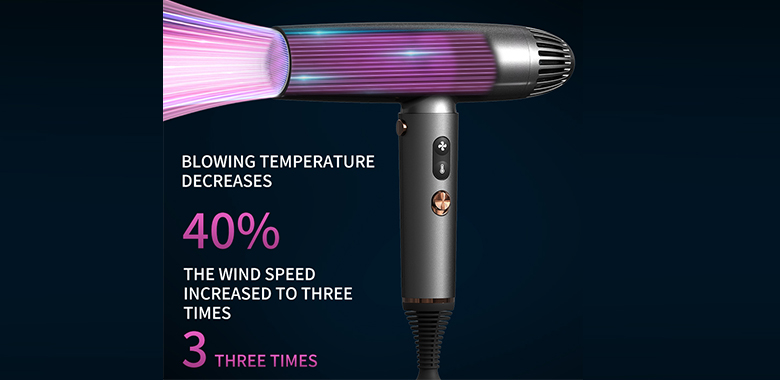 How much electricity does 220 volt hair dryer use? - Mesky
At 15 cents per kWh, that’s around 9 cents a day. Over a month, about $2.80.
Still not scary. But if three people in your house each do that, it starts showing up on the bill like a small, warm breeze of spending.
How does it compare to other stuff in your home?
A space heater might use 1,500 watts too. But you might leave it on for hours while you work from home.
An electric kettle can pull 1,500 watts, but only for a few minutes. Same with a microwave.
A clothes dryer? That’s a whole different beast. It uses thousands of watts for a long cycle, often an hour or more.
So the hair dryer’s dirty secret isn’t that it’s uniquely greedy. It’s that it’s powerful for a short burst, like a sprinter.
The space heater is the one jogging around the block all afternoon. The clothes dryer is the one running a marathon.
Why should you care?
Because small habits add up, and knowing the difference between power and energy helps you make smarter choices.
If your goal is to lower your electric bill, focus on the appliances that run long and hot: heaters, air conditioners, clothes dryers, old fridges.
 How Much Electricity Does A Electric Dryer Use at Mario Terrance blog
If your goal is to stop tripping the breaker, pay attention to high-wattage tools used at the same time, like hair dryers, kettles, and space heaters.
And if your goal is just to feel less guilty about your morning routine? A normal blow-dry is not the eco-villain you might think.
Tiny changes that actually help
Towel-dry your hair first. You’ll cut drying time, and the dryer won’t have to work as long.
Use the low or medium heat setting when you can. High heat dries faster, but it also uses more energy and can damage your hair.
Clean the lint filter or back vent. A clogged dryer has to run longer, and that’s when the cents start stacking up.
If you have multiple people getting ready at once, stagger the high-power stuff. Run the hair dryer, then the kettle, then the microwave. Your breaker will thank you.
The bottom line for your bathroom counter
A hair dryer uses a lot of watts, but usually for a short time. That makes it a moderate energy user overall.
For most people, it costs just a few cents per use—rarely enough to notice on its own.
So go ahead and dry your hair. Just maybe don’t run it for 45 minutes while also heating the bathroom with a space heater and boiling water for tea.
That’s when your electricity bill, your breaker, and your hair all start screaming at once.
