How To Get Customer Feedback In Restaurant

You’re three bites into a burger when the server swoops by and asks, “How’s everything?” You give the universal answer—“Good, thanks!”—even if your fries are limper than a wet...
You’re three bites into a burger when the server swoops by and asks, “How’s everything?” You give the universal answer—“Good, thanks!”—even if your fries are limper than a wet noodle and your soda tastes like carbonated regret. That’s not feedback; that’s a polite hostage exchange.
Restaurants run on this tiny lie every day: everyone smiles, nobody says anything, and the owner never learns why table six left half a lasagna. Getting real customer feedback isn’t about a fancy system. It’s about making people comfortable enough to tell you the truth.
Stop Asking “How Was Everything?”
That question is the restaurant equivalent of asking, “How’s life?” You’ll get a shrug and a thumbs-up. It’s too broad, too late, and too easy to dodge.
Must Read
Ask something specific instead. Try “What was the best thing you ate tonight?” and then follow with, “Was there anything you’d change?” Now you’re getting somewhere.
Specific questions work like a good waiter: they show up at the right time and don’t hover. They also give shy customers a script. Nobody has to invent a complaint from scratch.
Make It Ridiculously Easy
If your feedback method requires an email login, a password reset, and a blood sample, people will bail. Put a QR code on the receipt, or add a text number on the table tent. Keep it to one or two questions.
A simple “Rate us 1–5 and tell us one thing” is plenty. You can always dig deeper later. Easy beats impressive every single time.
Paper comment cards still work, too. Just make sure the pen isn’t dried out. Nothing says “we don’t care” like a chewed-up golf pencil and a card from 2019.
Train Your Team to Listen, Not Just Smile
Servers see the truth before the survey does. An empty glass, a pushed-away plate, a kid staring at mac and cheese like it insulted his ancestors—those are clues.
Teach your staff to ask, “What could make this better?” and then actually listen. Don’t defend or explain. Just nod and write it down.
 Why Collecting Customer Feedback is Important for Restaurant?
I once watched a server notice a family barely touched their tacos. She asked if something was off. The dad said the salsa was too smoky.
The chef tweaked it. That family came back three weeks later and ordered the same tacos. Feedback saved the relationship.
Offer a Tiny Reward (But Don’t Bribe)
A free dessert or a small discount for completed feedback feels like a fair trade. It says, “Your time matters.” But don’t offer a free appetizer for a five-star review; that’s not feedback, that’s perjury with ranch dressing.
If you reward honesty, you’ll get honesty. If you reward flattery, you’ll get flattery. And flattery won’t fix your soggy fries.
Watch the Internet Without Losing Your Mind
People will post a review on Google faster than they’ll tell you the soup was cold. So check your listings, read the rants, and look for patterns.
Respond publicly, briefly, and kindly. “Sorry about the wait. We’d love to make it right—please DM us.” Then take it offline.
Do not argue with a stranger about crouton ratios. You will not win. You will only become a screenshot.
Read the Room and the Trash
Sometimes feedback doesn’t use words; it uses leftovers. If half the salads come back with only croutons eaten, maybe the dressing is too heavy. If burgers return with the bun untouched, check the bun.
 6 Easy Ways To Take Customer Feedback In Your Restaurant | Petpooja
One owner noticed a mountain of uneaten pickle slices. Instead of getting offended, he asked customers if they wanted pickles. Waste went down, and pickle lovers rejoiced.
Silent feedback is still feedback. You just have to look for it.
Close the Loop
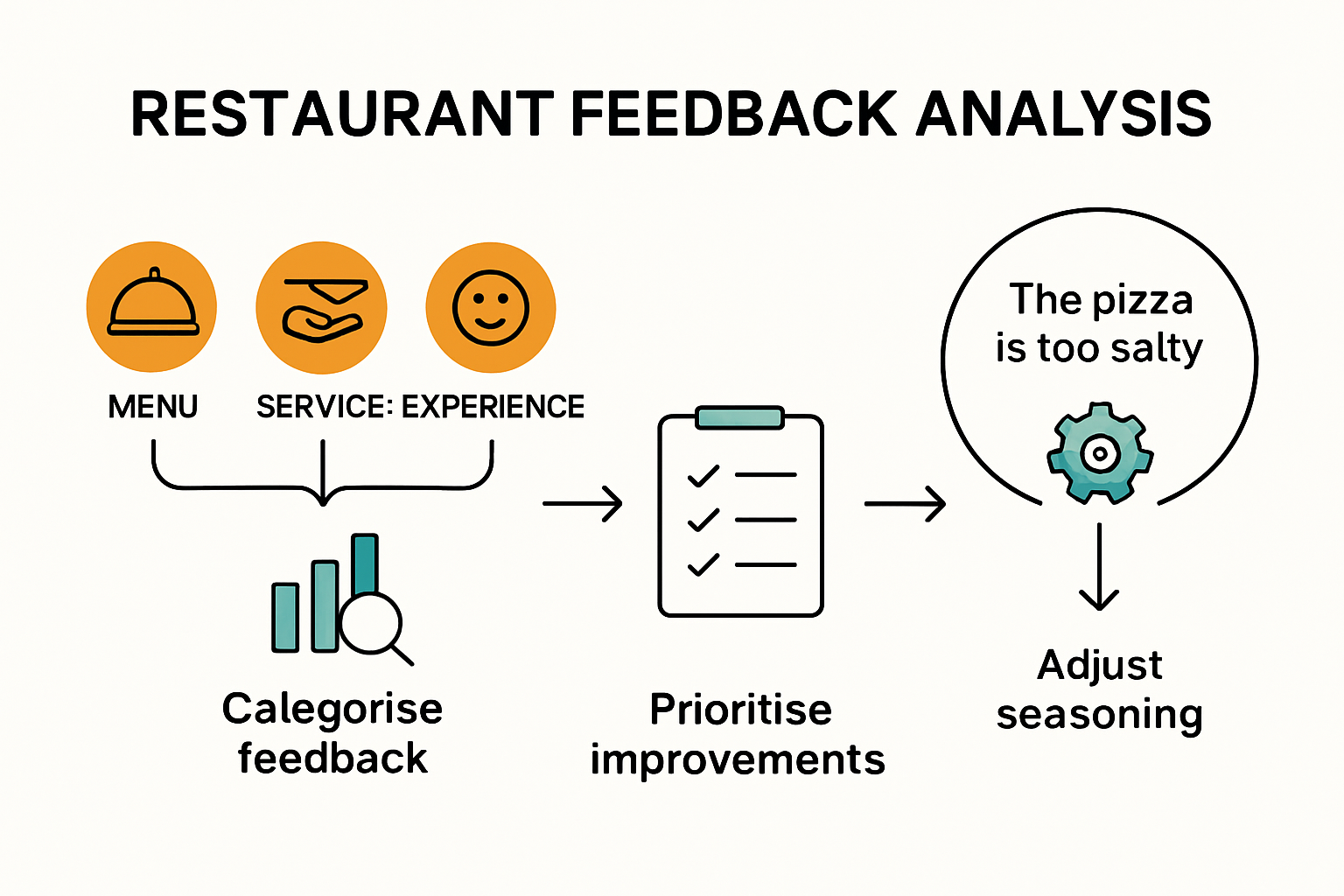
If someone tells you what’s wrong, tell them what changed. “You said the fries were cold, so we bought new heat lamps.” “You wanted more vegetarian options, so we added two.”
Put a sign by the door: “You asked, we listened.” That tiny sentence builds trust like a regular who knows your order by heart.
Feedback isn’t a one-night stand. It’s a relationship. Keep checking in, keep adjusting, and keep the fries hot.
The Magic Phrase to Steal
If you remember nothing else, remember this: “What’s one thing we could do better next time?” It’s specific, gentle, and almost impossible to answer with a grunt.
Ask it at the right moment—after a few bites, not when someone’s mouth is full. Ask it on the receipt, the table tent, or the follow-up text. Just ask it often enough that it becomes normal.
Then do something with the answer. That’s how a restaurant turns “Good, thanks!” into “Wow, they actually care.” And that’s how you get feedback that’s worth more than a polite nod.
