Difference Between A Condo And A Townhome

My friend Maya called me last spring, buzzing about her “new condo.” She described a rooftop deck, a cozy kitchen, and a neighbor who baked sourdough at 6 a.m. When I arrived,...

My friend Maya called me last spring, buzzing about her “new condo.” She described a rooftop deck, a cozy kitchen, and a neighbor who baked sourdough at 6 a.m.
When I arrived, I found a two-story brick home with a tiny front yard, a garage, and one shared wall. “It’s a townhome,” I said. She blinked. “Same thing, right?”
Not exactly. And that tiny mix-up is why so many buyers end up confused, signing papers for one thing while imagining another.
Must Read
Condo vs. Townhome: The Short, Honest Answer
A condo is mostly a legal ownership style. You own the inside of a unit—often called the “airspace”—and share ownership of hallways, roofs, elevators, pools, and land with other owners.
A townhome is mostly an architectural style. It’s usually multi-level, attached to at least one neighbor, and has its own entrance.
Here’s the twist: a townhome can legally be a condo. A condo can look like a townhome. The label on the listing isn’t always the full story.
Condo Life: Convenience With a Committee
With a condo, you typically own from the paint inward. The condo association handles the roof, siding, landscaping, and snow removal.
That sounds dreamy if you hate ladders and lawnmowers. It also means you pay monthly HOA fees, sometimes painfully high ones.
You’ll also live close to people. Very close. Your neighbor’s midnight laundry cycle becomes your midnight laundry cycle.
Condos often sit in elevator buildings, but not always. Some are garden-style, some are stacked flats, and some are detached—yes, a detached condo exists, because real estate loves chaos.
Townhome Life: More Space, More Stairs
A townhome usually gives you more square footage and a direct street entrance. You might get a garage, a basement, a small yard, or a roof deck.
You may own the land under your unit, or you may not. It depends on the legal setup, not the cute flower boxes by the door.
Because you share walls, noise still travels. But you often have less shared indoor space—no lobby, no elevator, no mysterious hallway smell.
Maintenance is a mixed bag. You might handle your own roof and yard, or the HOA might handle some of it. Read the docs, friend.
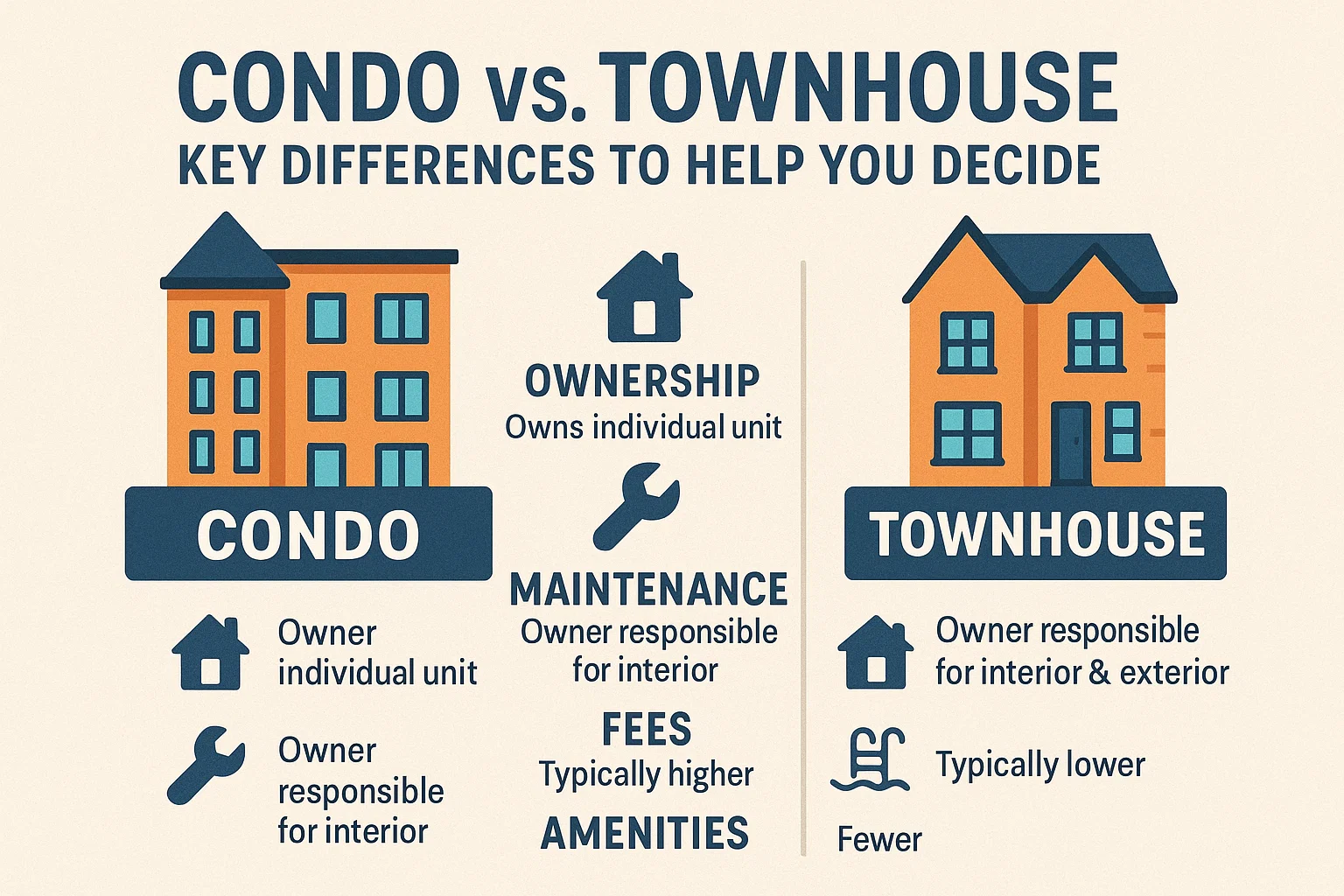 Condo vs. Townhouse: Key Differences to Help You Decide
The Difference That Actually Matters
The biggest difference is what you own. In a condo, you own a unit and a percentage of common elements.
In a townhome, you often own the unit and the land beneath it, plus the structure itself. But again—your specific deed and HOA rules rule.
This affects insurance, taxes, repairs, and how easy it is to sell later. It also affects how much control you have over your own exterior.
Want to paint your front door neon orange? In a condo, prepare for a committee meeting. In a townhome, maybe. Still maybe.
Fees, Rules, and Tiny Tyrannies
Both condos and townhomes often have HOAs. Those fees cover shared expenses and fund reserves for big repairs.
Condos tend to have higher fees because more is shared: roofs, elevators, lobbies, pools, and sometimes utilities. Townhome fees vary wildly.
Rules can be strict in either one. Some HOAs ban pets over 25 pounds. Some require approved curtains. Some have opinions about doormats.
If you hate being told what to do, you might prefer a detached house. If you hate mowing, a condo starts looking lovable.
Insurance Doesn’t Read Labels Either
Condo insurance usually covers your interior and personal belongings. The association’s master policy covers the building’s shared structure.
Townhome insurance often looks more like homeowner’s insurance. You may need to cover the roof, walls, and yard, depending on HOA rules.
Ask an insurance agent before you fall in love with the kitchen. Heartbreak is expensive.
 Rambler House - Types, Features, Benefits & Drawbacks
Financing and Resale Quirks
Condos can be harder to finance if too many units are rentals or one investor owns too much. Lenders get nervous, and nervous lenders charge more.
Townhomes sometimes avoid that problem because each unit sits on its own lot. But not always. Legal structure wins again.
Resale appeal depends on your local market. In dense cities, condos may sell fast. In suburbs, townhomes with garages may win.
Regional Confusion Is Real
In some cities, people say “condo” for any attached home with an HOA. In others, “townhome” means a specific two- or three-story layout.
This isn’t just a vocabulary problem. It changes what you’re buying, what you pay, and what you can change.
So when a listing says “townhome-style condo,” take a deep breath. Then ask for the declaration, bylaws, and plat.
So Which One Should You Choose?
Ask yourself what you want to own and what you want to outsource. A condo trades independence for convenience. A townhome often trades convenience for space and control.
Also ask about soundproofing, parking, reserve funds, special assessments, and rental rules. Those details shape daily life more than the label ever will.
And please, read the HOA documents. All of them. Yes, even the boring ones. Especially the boring ones.
The Takeaway
A condo is a legal structure. A townhome is a building style. Sometimes they overlap, which is exactly why the terms confuse smart people.
Maya eventually learned the difference. She still loves her townhome, especially the sourdough neighbor and the garage.
She just wishes someone had told her that “condo” and “townhome” aren’t synonyms. Consider this your friendly heads-up.
