Where Is A Good Location To Stay In Paris

Choosing where to stay in Paris is less about finding the perfect neighborhood and more about matching the city’s mood to your own. Paris is compact, but each arrondissement h...

Choosing where to stay in Paris is less about finding the perfect neighborhood and more about matching the city’s mood to your own. Paris is compact, but each arrondissement has its own rhythm, from grand boulevards to village-like lanes. The good news? You can’t really ruin a trip by picking the “wrong” area—only by picking one that fights your travel style.
First, Decode the Arrondissements
Paris is divided into 20 arrondissements, spiraling outward from the center like a snail shell. The lower the number, the more central you usually are—though “central” doesn’t always mean convenient. A fifth-floor walk-up near the Louvre can feel glamorous until you’re hauling groceries up ancient stairs.
Use the metro map as your reality check. Aim for a stop within a five- to seven-minute walk, especially if you plan late dinners or early trains. Rue and arrondissement matter, but the exact street can change everything.
Must Read
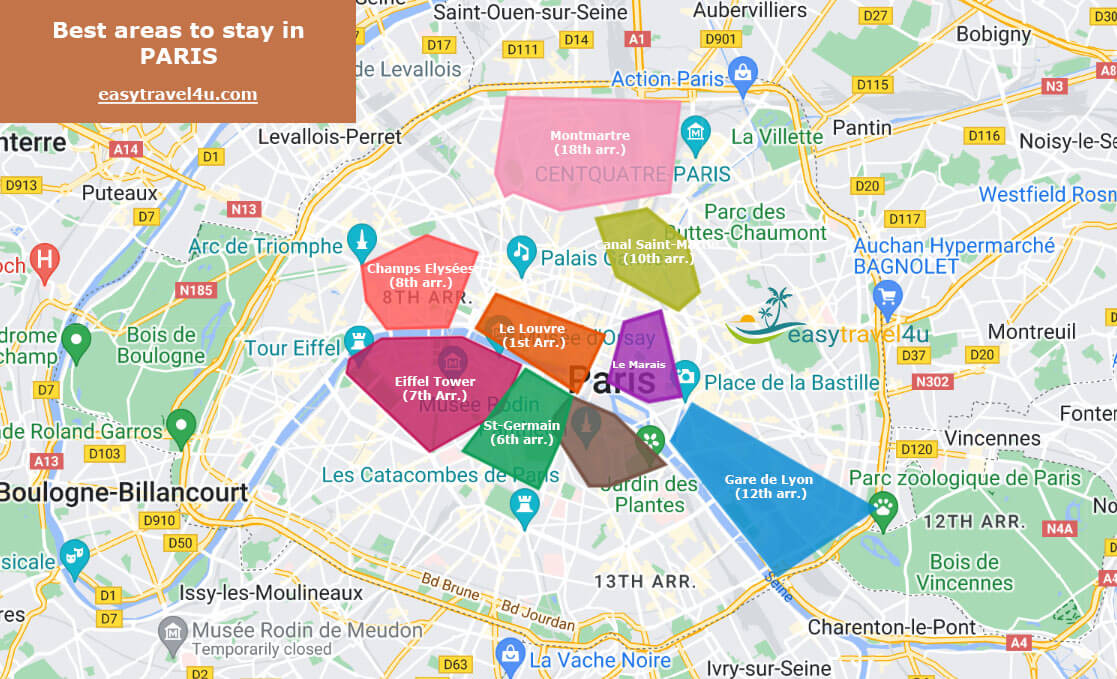
Le Marais: Style, Snacking, and Sunday Strolls
For a stay that feels like a magazine spread, Le Marais is tough to beat. It spans parts of the 3rd and 4th, with medieval lanes, hidden courtyards, and a lively mix of boutiques and falafel shops. The area was once a swamp—hence the name—and later became an aristocratic enclave before evolving into today’s creative, LGBTQ+-friendly hub.
Stay here if you want walkability, great coffee, and the pleasure of getting pleasantly lost. Bonus: parts of the Marais stay open on Sundays, when much of Paris shuts down. Just beware: hotel rooms can be small and streets can get loud at night.
Saint-Germain-des-Prés: Classic Paris, With a Side of People-Watching
The 6th arrondissement delivers the Paris of postcards: café terraces, art galleries, and the Luxembourg Gardens nearby. Sartre and Beauvoir once held court in its cafés, and the literary ghosts still linger if you order an espresso slowly enough.
It’s polished, pricey, and perfect for first-timers who want to step out the door and into the action. You’ll pay for the privilege, but the flâneur lifestyle comes included. Book early, especially in spring and fall.
Montmartre: Village Vibes and Sacré-Cœur Sunsets
Up in the 18th, Montmartre feels like a small town glued to the side of a hill. Picasso, Toulouse-Lautrec, and a swarm of poets once lived cheaply here; now the streets are crowded with visitors and portrait artists. Still, if you stay slightly away from the main square, you’ll find quiet corners and bakery smells that feel genuinely local.
 Indianapolis Hotels Map: Best Areas to Stay
This is a good pick if you love atmosphere more than efficiency. The trade-off is hills, stairs, and a longer metro ride to central sights. Pack comfy shoes—really.
The Latin Quarter: Bookshops, Students, and Late-Night Energy
The 5th arrondissement buzzes with students, old bookshops, and cheap eats that balance out Paris’s fancier side. Shakespeare and Company sits near the Seine, and the narrow streets around Rue Mouffetard make morning walks feel cinematic.
Stay here for lively evenings and easy access to Notre-Dame and the Jardin des Plantes. It’s central without being stiff, though some streets can feel touristy by day.
Canal Saint-Martin and Bastille: Young, Relaxed, and Local-Feeling
The 10th and 11th arrondissements have become favorites for travelers who want a less postcard-perfect Paris. Canal Saint-Martin offers iron footbridges, waterside picnics, and a cameo in Amélie. Bastille brings market energy, wine bars, and a nightlife scene that doesn’t try too hard.
This area is great for repeat visitors, food lovers, and anyone who prefers aperitifs over monuments. It’s not as central as the Marais, but the metro fixes that quickly.
 WHERE TO STAY in PARIS - Best Areas & Neighborhoods
Near the Eiffel Tower: For First-Timers and Romantics
Staying in the 7th, 15th, or 16th near the Eiffel Tower means waking up to that famous iron silhouette. The tower sparkles for five minutes every hour after dark—a small, reliable bit of magic. Neighborhoods here are quieter and more residential, which can be a blessing after a packed day.
Just avoid booking a room directly on a major avenue if you value sleep. And remember: the tower is beautiful, but it isn’t the center of daily Parisian life.
Practical Tips Before You Book
Check the nearest metro stop, not just the neighborhood name. Look for air conditioning if you’re visiting in summer—many older Parisian hotels still don’t have it. Read recent reviews for noise, elevator size, and neighborhood safety at night.
If you’re torn, split your stay: a central base for sightseeing, then a quieter area for lingering. Paris rewards slow mornings and accidental detours. Pick a place that suits your rhythm, not just your checklist.
In daily life, where we stay—or simply where we pause—shapes what we notice. A good Paris neighborhood won’t just give you a bed; it will give you a way of moving through the day. Choose one that lets you walk a little slower, look up a little more, and feel, even briefly, like the city is yours.
