Facts About The Harbour Of Rio De Janeiro

The Bay That Got Named by Mistake Portuguese sailors rolled into this enormous blue space on January 1, 1502. They saw all that water and thought, yep, that's a river. So they...

The Bay That Got Named by Mistake
Portuguese sailors rolled into this enormous blue space on January 1, 1502. They saw all that water and thought, yep, that's a river. So they named the place Rio de Janeiro, which means "River of January."
The joke is, it's not a river at all. It's a bay, a huge saltwater inlet called Guanabara Bay. Imagine naming your cat "Dog" because you saw it from across the street. That's Rio in a nutshell.
It's Not a River; It's a Giant Saltwater Mixing Bowl
Guanabara Bay covers roughly 412 square kilometers. That's about 160 square miles, or enough room for a lot of boats and a lot of opinions. Around 130 islands sit inside it like croutons in soup.
Must Read
The entrance is narrow, only about 1.6 kilometers wide. It slips between the Sugarloaf Mountain side and forts on the opposite shore. From up high, the bay looks like a blue puzzle piece someone jammed into the coastline.
Everyday Life Around the Water
Ferries chug from Praça XV to Niterói and Paquetá. Commuters sip coffee, stare at their phones, and pretend the view isn't showing off. It's basically a bus ride, except the bus is a boat and the traffic is waves.
The Niterói Bridge stretches about 13 kilometers across the bay. On a good day, it's a stunning drive. On a bad day, it's a concrete parking lot with a water view.
Bay-side beaches like Flamengo and Botafogo have their own vibe. You might see a pickup football game, a stray flip-flop, and someone selling cold coconut water. It's messy, but it's alive.
Islands With Personalities
Ilha do Governador is the big one, and it's home to Galeão International Airport. So yes, planes take off over a bay full of islands. It's like a travel poster that can't decide what it wants to be.
Paquetá is quieter, with bicycles, carts, and a car-free-ish feel. Ilha Fiscal has a green palace that looks like a wedding cake with a history degree. Other islands are fancy, forgotten, or strictly for the birds.
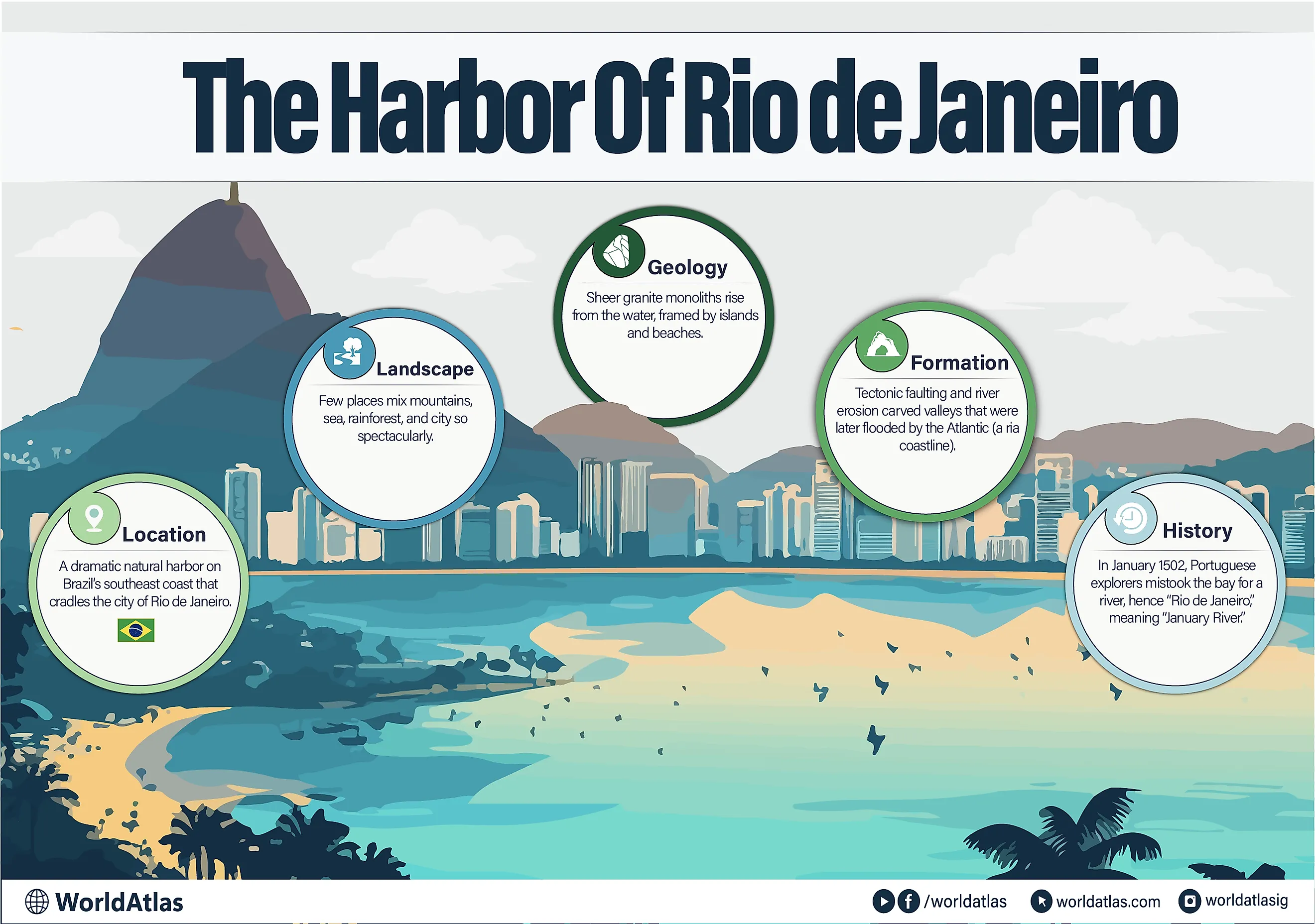 The Harbor of Rio de Janeiro, Guanabara Bay
The Views Are Unfair
Sugarloaf Mountain and Christ the Redeemer watch over the bay like two friends who never stop photobombing. Tourists take the same photo from the cable car, and honestly, why not? It's a great photo.
Locals shrug at the beauty while waiting for the bus. At sunset, the water turns pink, orange, and gold. It looks like someone spilled a mango smoothie into the sea, then decided to charge admission.
Pollution: The Awkward Family Secret
Here's the less pretty part: Guanabara Bay has a serious pollution problem. Untreated sewage, trash, and plastic flow into it, and the water sometimes looks like a smoothie you should definitely not drink.
Mangroves have been lost, and wildlife has suffered. Still, there are cleanup efforts, community projects, and signs of life. Fishermen still head out, and Guiana dolphins still show up.
Fun Facts for Your Next BBQ
The name "Guanabara" comes from Tupi, often translated as "arm of the sea" or "bosom of the sea." Either way, it sounds better than "big wet parking lot."
The bay was a major port long before Rio became a global icon. Ships, sugar, coffee, and gold all moved through here. History doesn't just sit in museums; it floats.
 15 Harbor Of Rio De Janeiro Facts - Facts.net
Quick Hitting Facts
It's a bay, not a river. It has about 130 islands. Its entrance is narrow, its history is huge, and its sunsets are show-offs.
It supports ferries, fishing, shipping, and tourism. It also struggles with pollution, like many busy harbors around the world.
And yes, the city is named after a mistake. That's either embarrassing or charming, depending on how much you've had to drink.
Why It Feels Familiar
Every port city has water that's beautiful and complicated. Rio's just happens to have better marketing, taller mountains, and more dramatic sunsets.
You don't need to visit to understand it. Gorgeous view, annoying traffic, trash in the wrong place, football on the sand, and someone selling snacks. That's basically Rio's harbor in a nutshell.
So next time you see a postcard of Rio, look past the Christ statue and the Sugarloaf. The bay is the real main character, doing its chaotic, gorgeous, flawed thing.
