Why Are The Smoky Mountains Called Smoky

If you’ve ever looked at the Smoky Mountains from a distance, you might have wondered if someone forgot to put out a campfire, because the ridges roll into one another, wrappe...
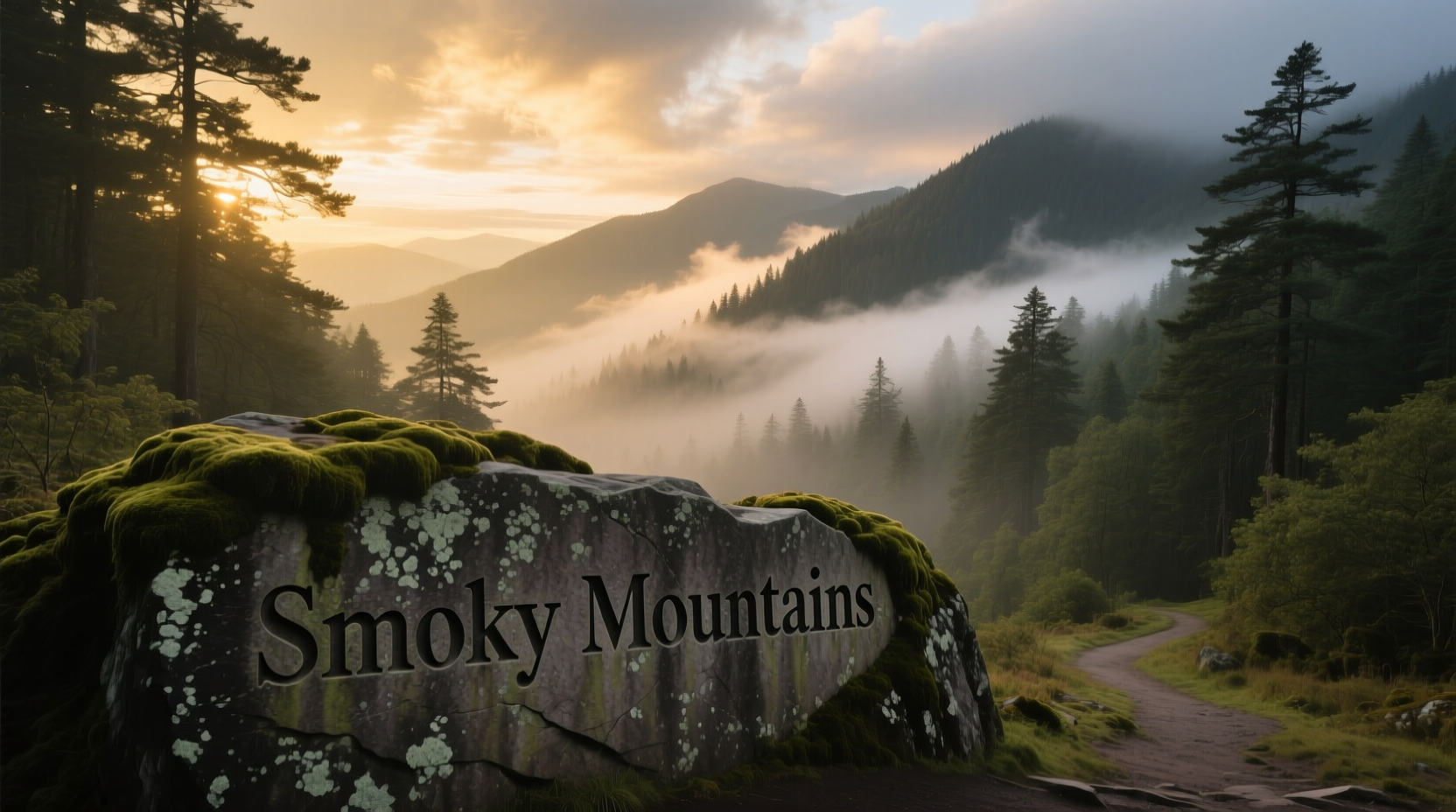
If you’ve ever looked at the Smoky Mountains from a distance, you might have wondered if someone forgot to put out a campfire, because the ridges roll into one another, wrapped in a soft blue-gray haze that looks like smoke drifting from hidden chimneys. But there’s no fire. The “smoke” is a beautiful trick of trees, sunlight, and mountain air.
The Cherokee people called this range Shaconage, often translated as “place of blue smoke.” That name wasn’t poetic marketing. It came from what they saw every day: misty blue layers rising from valleys and clinging to peaks.
So, What’s Actually Making The “Smoke”?
First, let’s clear one thing up: it’s not smoke in the usual sense. The mountains aren’t burning. Instead, the haze comes from a natural chemical dance between the forest and the sky.
Must Read
Trees, shrubs, and even tiny mosses release invisible compounds called volatile organic compounds, or VOCs. Think of that fresh pine scent after rain or the green smell of a garden. Those scents are part of the same family of molecules.
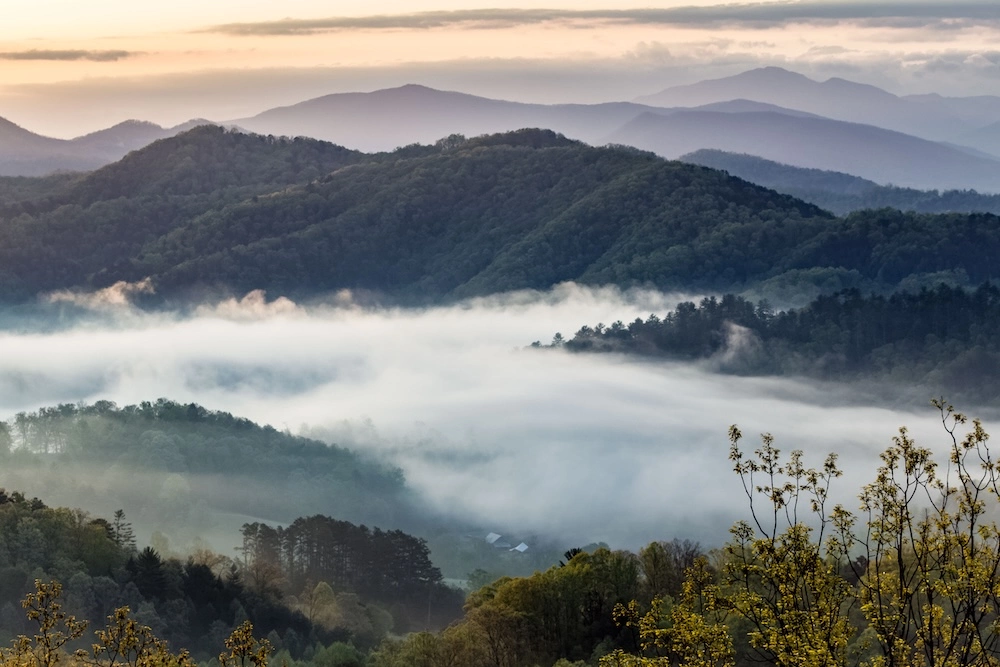
When these compounds drift into the air, they meet sunlight, oxygen, and moisture. That combination creates tiny particles. Those particles scatter light, especially blue light, which gives the mountains their signature bluish haze.
It’s Basically A Forest Breathing
Imagine standing in a warm kitchen while someone bakes bread. The smell fills the room, even though you can’t see it. Now imagine an entire forest doing something similar, but on a scale of hundreds of thousands of acres.
On hot, humid days, the forest “exhales” more of these compounds. The mountains also trap moisture and air in their valleys. Cool air settles below warmer air, acting like a lid on a pot.
That trapped air lets the haze build up, especially in the morning. It’s why sunrise views in the Smokies often look like a watercolor painting that hasn’t dried yet.
Why The Name Stuck
The name stuck because it’s accurate enough and mysterious enough. Early travelers didn’t have air quality monitors or chemistry labs. They saw blue mist and called it smoke.
 Why Are the Smoky Mountains Smoky?
Native Americans had already named the place for that same haunting beauty. The Cherokee described it as blue smoke, not because they were confused, but because they were paying attention. The mountains really do seem to breathe.
Not All Smoke Is Created Equal
Here’s where things get a little tricky. The Smokies’ natural haze is usually blue or silvery. Pollution haze can look white, brown, or just plain murky.
Coal plants, cars, and factories can add extra particles to the air. Those particles can make the view less clear and the air less healthy. In the past, pollution sometimes stole the show.
Thanks to cleaner air rules, the park has seen improvements. But the Smokies still face challenges from ozone and fine particles. So the name “Smoky” is a reminder, not just a compliment.
Why You Should Care (Beyond A Pretty Postcard)
The Smoky Mountains are one of the most biodiverse places in North America. They’re home to synchronized fireflies, ancient salamanders, and forests that change color like a mood ring.
The blue haze is part of that ecosystem, not a separate decoration. It shows how closely air, plants, and weather are connected. When one piece changes, the whole picture changes.
 Images Of The Smoky Mountains Great Smoky Mountains National Park In
If pollution gets worse, those famous long-range views can fade. That matters for wildlife, for local economies, and for anyone who needs a quiet place to recharge. A clear view isn’t just scenery; it’s a sign of a healthy landscape.
How To Spot The Real Thing
Next time you’re in the Smokies, look at the ridges in layers. Natural haze tends to have a soft blue tint, especially in the distance. It often looks thicker in valleys and thinner up high.
Fog is different. Fog is made of tiny water droplets close to the ground, and it can feel wet and chilly. Haze is made of tiny particles suspended in the air, and it can hang around even when you’re dry.
The Takeaway
The Smoky Mountains are called smoky because the forest, sunlight, and humidity create a natural blue haze. It’s not a fire. It’s a forest breathing, a weather pattern, and a piece of Cherokee heritage all rolled into one.
So when you see those blue ridges, you’re not looking at smoke. You’re looking at chemistry, biology, and story. You’re looking at a place that earned its name the honest way.
And maybe that’s why people care. The name isn’t just a label. It’s an invitation to slow down, breathe deep, and notice how alive the mountains really are.
