What Is Unique About La La Land's Ending

My friend gripped my arm during the final five minutes of La La Land. She whispered, “Wait, is this actually happening?” Then the piano note cut, the fantasy vanished, and we...

My friend gripped my arm during the final five minutes of La La Land. She whispered, “Wait, is this actually happening?” Then the piano note cut, the fantasy vanished, and we were back in Seb’s club with Mia and her husband. She let go, blinked, and said, “I feel personally attacked.”
That reaction is the whole point. The ending doesn’t just make you sad. It makes you recalculate everything the film has been about.
It Gives You the Happy Ending, Then Takes It Back
The Five-Minute Fantasy
Mia and Sebastian do not end up together. That’s not a spoiler anymore, right? If it is, sorry, but you’ve had years to catch up.
Must Read
She becomes a successful actress. He opens his jazz club. They both get the dreams they fought for, just not each other.
Then Mia walks into Seb’s club with her husband. Seb sees her. He sits down and plays their song.
What follows is the famous “what if” sequence. In five minutes, we watch a whole alternate life: marriage, kids, Paris, a different kind of happiness. It’s gorgeous, romantic, and completely imaginary.
That’s the first unique thing: a typical movie would make that montage real, but La La Land shows it to you, lets you fall for it, then pulls the rug out. Cruel? Maybe. Honest? Absolutely.
Nobody Is the Villain
No One to Blame, Nothing to Fix
Think about how rare that is. In most breakup stories, someone cheats, lies, or turns into a jerk. Here, nobody does anything monstrous.
Mia and Seb love each other. They also love their work. Those loves don’t fit together, at least not at that moment.
You could argue Seb should have gone to Paris, or that Mia should have supported his club, or argue forever. The film refuses to settle it.
 La La Land Ending Explained (In Detail)
That’s why the ending lingers. It doesn’t ask, “Who was wrong?” It asks, “What would you have done?” And honestly, you don’t know.
The Final Smile Says More Than a Kiss
Recognition, Not Reunion
After the fantasy ends, Mia and Seb look at each other across the room. She smiles. He smiles. It’s small, tired, and real.
It’s not a “let’s run away together” smile. It’s not a “I hate you” smile either. It’s recognition.
They’re saying: I see you; I’m glad you made it; I remember what we were; thank you. That single look carries more weight than a kiss or a tearful speech. It’s the quiet proof that their love mattered, even if it didn’t win.
If you’ve ever run into an ex and felt that weird mix of love, distance, and pride, you know this smile. It’s the emotional equivalent of a piano chord that resolves and doesn’t at the same time.
A Musical That Admits Life Isn’t a Musical
The Song That Can’t Solve Everything
Musicals usually solve problems by singing. Someone bursts into song, and the world bends to their feelings. La La Land uses that language beautifully.
But in the ending, the big musical number is a fantasy. It doesn’t change reality. It just lets us feel what reality cost.
That’s a bold move for a movie that opens with strangers dancing on a freeway. It’s like the film is saying, “Yes, life can feel like a musical. No, it won’t always end like one.”
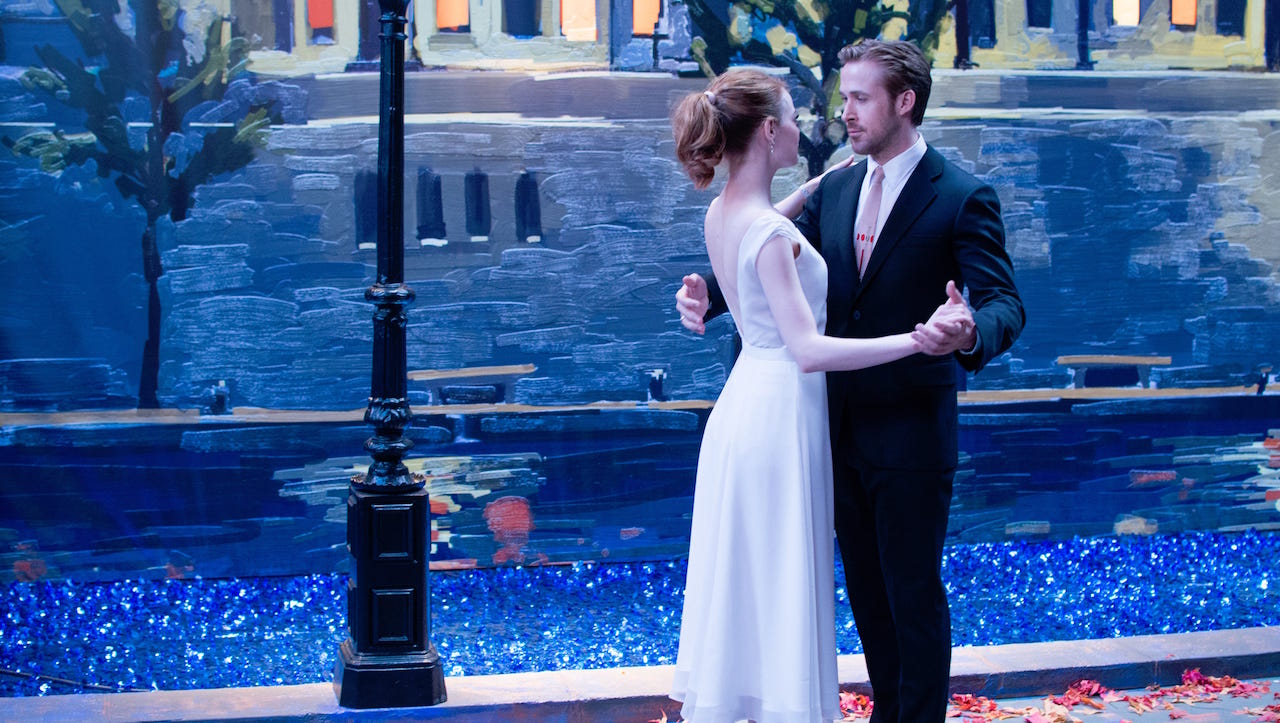 The Beauty in the Unconventional La La Land Ending | Den of Geek
It Refuses the Clean Break
Happy, Sad, and True
Most endings want you to feel one thing—happy, devastated, relieved—while La La Land wants you to feel several things at once.
It’s a happy ending for their careers. It’s a sad ending for their romance. It’s also a hopeful ending for the memory they shared.
That mix is messy, which is exactly why it works. Real life rarely hands you a neat bow. It hands you a piano bench and a look across a crowded room.
And if you’ve ever had to choose between a person and a path, you know how messy that can get. The film doesn’t judge you. It just plays the song.
Why We’re Still Talking About It
A Bittersweet Ending That Trusts Us
The ending of La La Land is unique because it gives us the fantasy without letting us live in it. It honors ambition and love without pretending they always agree.
It also trusts the audience. It doesn’t explain the smile. It doesn’t tell us what happens next. It leaves us with a bittersweet question and a beautiful tune.
So yes, my friend felt personally attacked, and I did too. But that’s the magic: the ending doesn’t break your heart just to break it. It reminds you that some loves are real because they don’t last.
And somehow, that’s more romantic than a reunion. Don’t you hate that? I do—and I love it.
