How Cold Is It Inside A Hockey Arena

Walk into a hockey arena and your first thought is usually “Why did I wear these thin socks?” Your second thought is “Did someone leave the freezer door open?” But the truth i...

Walk into a hockey arena and your first thought is usually “Why did I wear these thin socks?” Your second thought is “Did someone leave the freezer door open?” But the truth is stranger than the shiver running down your spine.
The ice is cold, yes. The building, however, is not one giant ice cube. It’s a carefully controlled climate machine that happens to have a frozen floor in the middle.
The Ice Itself: Colder Than Your Fridge, Warmer Than Your Freezer
A typical hockey rink keeps its ice between 24 and 26 degrees Fahrenheit (about -4 to -3 Celsius). That’s colder than your refrigerator, which usually sits around 37°F. But it’s actually warmer than a standard freezer, which hovers near 0°F.
Must Read
So the next time you lick the glass and regret it, remember: you’re not leaning against absolute zero. You’re leaning against very organized, very slippery cold.
The ice isn’t just a block of water, either. It’s built in thin layers over a concrete slab, with paint, logos, and a whole hidden network of refrigerant pipes underneath. The surface you see is often only three-quarters of an inch to an inch and a half thick.
The Air: A Weird Mix of Sweater Weather and Arctic Draft
Here’s the twist: the air in most hockey arenas is kept around 55 to 65°F (13 to 18°C). That’s not freezing. That’s “I could probably survive in a hoodie” territory.
NHL buildings often aim for the lower end of that range to keep the ice hard and fast. If the air gets too warm, the ice gets soft, the puck bounces, and players start sliding around like they’re on a Slip ’N Slide.
But if the air gets too cold, fans suffer, concession workers rebel, and the beer lines freeze solid. Okay, maybe not the beer. But nobody wants to watch a game in a meat locker.
Why Your Seat Changes Everything
Sit right against the glass, and you’re basically volunteering for a gentle frostbite experiment. The ice radiates cold, the concrete floor sucks warmth from your feet, and every skater creates a little breeze that feels like a personal blizzard.
Head up to the nosebleeds, though, and you might be downright comfortable. Heat rises, crowds generate body warmth, and the building’s HVAC system usually keeps the upper bowls less frigid.
That’s why you’ll see one fan in a parka and another in a T-shirt. They are both correct. They are just sitting in different microclimates.
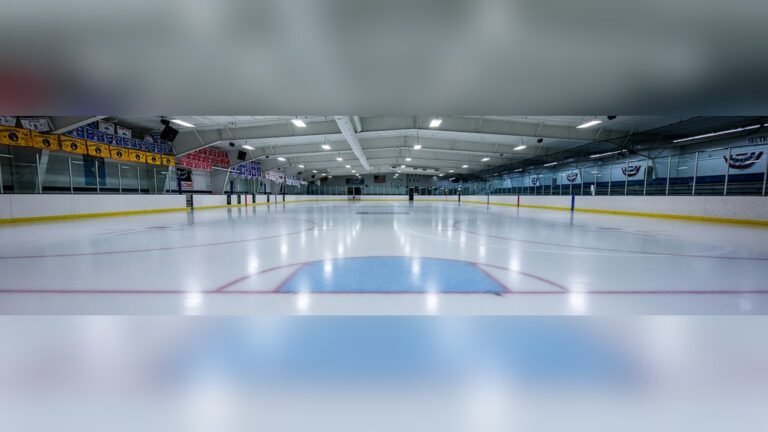 Optimal Temp Inside Hockey Arena for Peak Performance
The Zamboni Factor
Every time the Zamboni rolls out, it lays down a thin layer of hot water that freezes almost instantly. That process releases heat and moisture into the air, which is why arenas need serious dehumidifiers.
Too much humidity, and you get fog hanging over the ice like a haunted house. Too little, and the ice gets brittle and chippy. The ideal indoor humidity for hockey is often around 30 to 50 percent.
So yes, the arena is basically a giant climate-controlled science fair project. With better snacks.
Community Rinks Are a Different Beast
Local rinks often don’t have the fancy HVAC systems of pro arenas. The air might sit around 45 to 55°F, and the lobby is the only tropical zone in the building.
That’s where you see parents in full ski gear and teenagers in shorts, because teenagers are a different species. If you’re in an older arena, the cold can seep through the concrete and make your toes question all your life choices.
Why It Feels Colder Than It Actually Is
Your body is a terrible thermometer when you’re sitting still. Cold concrete pulls heat away from your feet, and metal seats do the same to your backside.
Add in the fact that you’re not moving for long stretches, and your circulation slows down. Suddenly, 60°F feels like a polar expedition.
Players have the opposite problem. All that padding and sprinting makes them so hot that they sometimes look like they’re skating in a sauna. Meanwhile, you’re in row three, shivering into your popcorn.
 How Cold Is It Inside A Hockey Arena at Joan Dudley blog
Coaches get the worst of both worlds. They stand near the ice in suits, which are basically fancy napkins, and try not to look miserable on camera.
Surprising Facts from the Frozen Business
Some rinks use reclaimed heat from their refrigeration systems to warm the building, melt snow, or heat water. That’s right: the cold that freezes the ice helps keep you from turning into a popsicle.
Ice temperature can also change during a game. More skaters mean more friction, which can warm the surface slightly. That’s why crews sometimes shave or flood the ice between periods.
And no, the whole arena isn’t kept at 24°F. If it were, the ice would be fine, but the fans would be a human popsicle exhibit.
How to Dress Like a Pro
Wear layers, because the arena might be 65°F in the seats and 50°F by the glass. Thick socks are not optional; concrete is a heat thief with no remorse.
Bring a blanket if you’re fancy. Nobody will judge you. They’ll envy you.
So how cold is it inside a hockey arena? The ice is around 24 to 26°F, the air is usually 55 to 65°F, and your personal experience depends on whether you’re near the glass or safely tucked under a heating vent.
Bring a hoodie, bring a blanket, and maybe bring a friend who runs warm. The arena isn’t a freezer, but it’s not a beach either. It’s a beautifully weird cold-weather machine with a scoreboard.
