Top U.s. Blues Labels From The 1920s

The 1920s were a strange cocktail of Prohibition, flappers, and record executives realizing Black blues singers could sell records by the truckload. These labels were not char...

The 1920s were a strange cocktail of Prohibition, flappers, and record executives realizing Black blues singers could sell records by the truckload. These labels were not charities; they often paid artists a pittance and copyrighted songs under someone else’s name. Yet they captured voices that still hit like a shot of cheap whiskey.
OKeh Records: The Label That Started the Riot
OKeh began as a budget operation, the kind of label that would record a guy sneezing if it sold. Then Mamie Smith recorded “Crazy Blues” in 1920, and the roof caved in. It sold over a million copies eventually, proving that the “race records” market was a gold mine.
OKeh also recorded Louis Armstrong, Lonnie Johnson, and Victoria Spivey. The sound quality often resembled a telephone call from inside a hurricane. But the performances were so alive that you forgave the hiss.
Must Read
Paramount Records: The Furniture Company That Accidentally Made History
Paramount was owned by the Wisconsin Chair Company, because why not? A chair company decided to sell records, and somehow ended up with Ma Rainey, Blind Lemon Jefferson, Charley Patton, and Skip James. It was like a hardware store discovering it had signed the Beatles.
Paramount’s records were pressed on shellac so cheap that they could wear out during a single play. Audiophiles weep, but blues fans know that scratch is part of the sermon. The label’s race series became a bible for Delta blues.
Columbia Records: The Corporate Giant with a Blues Heart
Columbia was a major label with polished studios and national reach. It signed Bessie Smith, the Empress of the Blues, and turned her into a superstar. Her 1923 hit “Down Hearted Blues” sold hundreds of thousands of copies, which was basically a small fortune in the Jazz Age.
Columbia also recorded Clara Smith, Ethel Waters, and Fletcher Henderson’s orchestra. The label could be paternalistic and stingy, but it gave blues a bigger stage. Suddenly a song from a Southern tent show could echo in a Chicago apartment.
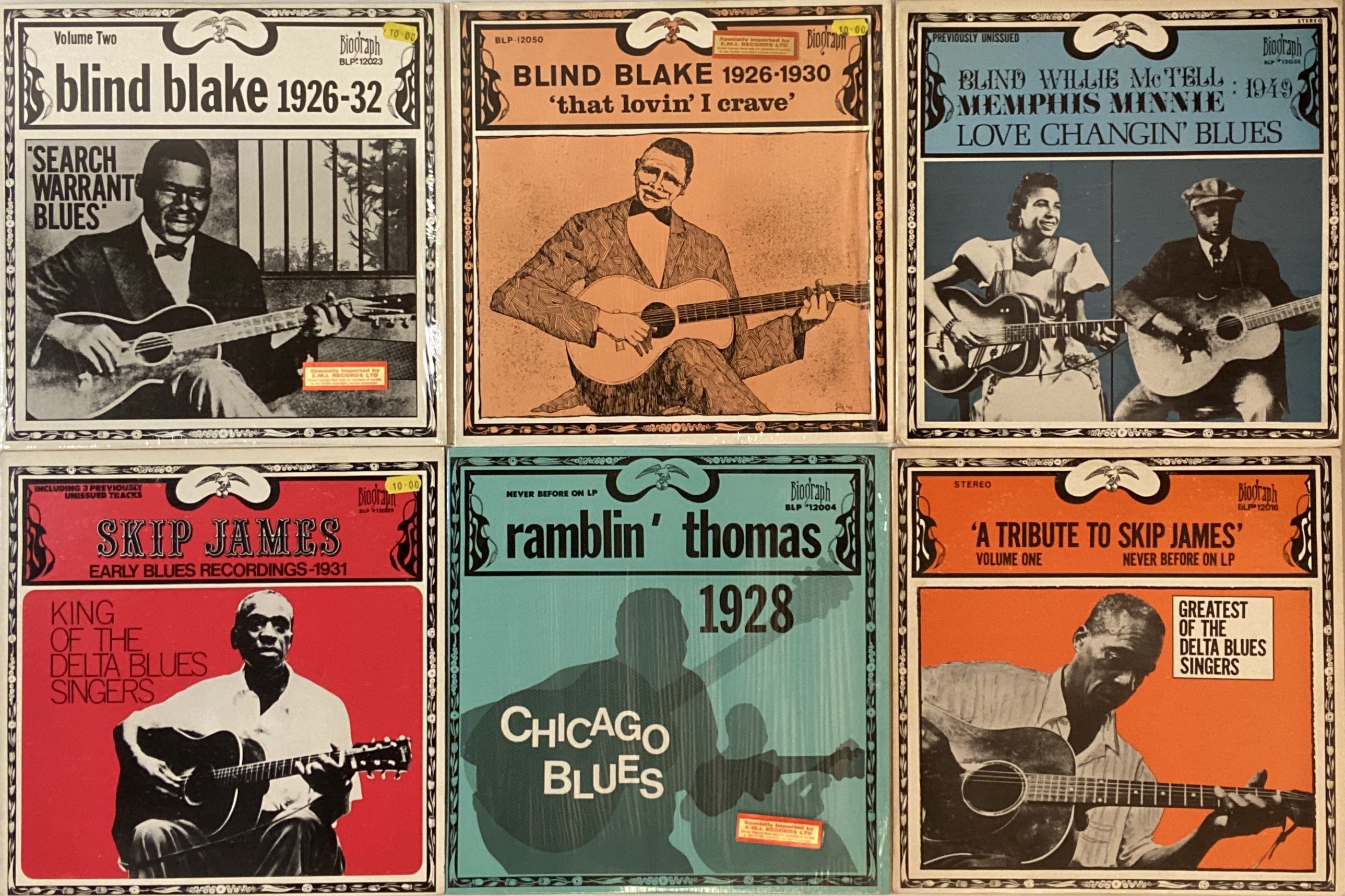 Lot 273 - BIOGRAPH LABEL BLUES - LP COLLECTION
Victor Records: The Posh Label That Got Down and Dirty
Victor was the fancy label, home to opera stars and military bands. Then it recorded Blind Willie Johnson’s “Dark Was the Night, Cold Was the Ground,” a wordless slide-guitar moan that sounds like the universe crying. It also captured Jelly Roll Morton’s piano and Jimmie Rodgers’ yodeling blues.
Victor’s race series wasn’t as huge as OKeh’s or Paramount’s, but its catalog was ridiculously deep. It was like a tuxedo-wearing butler who secretly keeps a moonshine still. The label proved that blues could sell to anyone with ears.
Vocalion Records: The Underrated Middle Child
Vocalion never gets the glory of Columbia or the mythology of Paramount. But it recorded King Oliver, Jimmie Noone, and a pile of great blues queens. Its race series was solid, varied, and weirdly adventurous.
Vocalion was like the friend who isn’t famous but has the best playlist. It later recorded Robert Johnson in the 1930s, but in the 1920s it was already doing serious work. If you find a Vocalion blues record in a thrift store, buy it and act smug.
 Les labels mythiques qui ont façonné l'ère du rythm'n blues
Black Swan Records: The First Major Black-Owned Label
Black Swan was founded in 1921 by Harry Pace, and it was the first major record company owned and operated by Black Americans. W.E.B. Du Bois served on its board, which is like getting a Nobel laureate to help you name your mixtape. The label recorded Ethel Waters, Alberta Hunter, and Fletcher Henderson.
Black Swan aimed to offer race records with dignity and fairer treatment. It went bankrupt by 1924, crushed by bigger labels and distribution problems. Its legacy is enormous: it proved that Black ownership in music wasn’t a dream but a business plan.
Gennett Records: The Indiana Underdog with a Hot Horn
Gennett was based in Richmond, Indiana, a town so quiet you could hear a pin drop. It recorded King Oliver’s Creole Jazz Band in 1923, featuring a young Louis Armstrong. Those sides are like finding a lost city made of brass.
Gennett also recorded Jelly Roll Morton, Bix Beiderbecke, and a mountain of blues and jazz. The label’s sound was raw, immediate, and occasionally distorted. But that’s just the sound of history refusing to be polite.
So there you have it: a handful of labels that treated blues like a product, a gamble, and sometimes a revolution. They cheated artists, lost masters, and pressed records on garbage materials. And yet, without them, we might not have the blues as we know it. Raise a glass to the scratchy, shady, glorious 1920s.
