How Do You Fix A Sliding Glass Door

Your sliding glass door used to glide like it was on ice. Now it jerks, scrapes, and acts like it’s auditioning for a horror movie. The good news? Most sliding door problems a...

Your sliding glass door used to glide like it was on ice. Now it jerks, scrapes, and acts like it’s auditioning for a horror movie. The good news? Most sliding door problems are surprisingly fixable with basic tools and a little patience.
Before you start, grab a vacuum, a screwdriver, silicone spray, a rag, and maybe an old toothbrush. Oh, and a helper if your door is heavy. Glass doors are not light; they’re basically windows with trust issues.
First, Diagnose the Drama
Slide the door open a few inches and listen. Is it grinding at the bottom, wobbling at the top, or refusing to latch? That tells you whether you’re dealing with dirty tracks, worn rollers, or alignment problems.
Must Read
Look at the track closely. If it’s packed with pet hair, sand, and unidentified crumbs, you’ve found your culprit. Dirt is the villain in most sticky-door stories.
Quick Tool Check
You don’t need a fancy workshop. A screwdriver, vacuum, silicone lubricant, and mild cleaner will handle most fixes. If you need replacement rollers, bring the old one to the hardware store for a match.
Step 1: Clean the Tracks
Vacuum the track with a brush attachment. Then wipe it down with a damp rag and a little mild soap. For caked-on grime, use that retired toothbrush and scrub like you’re mad at it.
Dry the track completely. A clean track can make a stubborn door slide like new, and it costs almost nothing. If that solves it, treat yourself to a fancy beverage.
Step 2: Adjust the Rollers
Most sliding doors hang on rollers, and those rollers can be adjusted. Look for adjustment screws near the bottom or top edges of the door. Sometimes they hide behind small plastic plugs.
Turn the screw a quarter turn at a time. One direction raises the door; the other lowers it. Small adjustments only, because tiny changes make a big difference.
Test the door after each tweak. If it slides smoothly and lines up with the lock, stop while you’re ahead. Over-tweaking is how simple fixes become weekend projects.
Top-Rolling vs. Bottom-Rolling Doors
Some doors roll on a top track, while others ride on bottom rollers. Top-rolling doors are usually easier to adjust because you can reach the rollers without lifting the whole panel. Bottom-rolling doors may need a little more muscle and patience.
 Mastering the Art of Repair: How to Put a Sliding Glass Door Back on T
If you’re not sure which type you have, look at the top and bottom edges with a flashlight. The rollers will reveal themselves. They’re shy, but not that shy.
Step 3: Lubricate the Right Way
Spray a silicone-based lubricant on the track and rollers. Avoid greasy products that attract dirt, unless you want to do this again next month. Silicone keeps things slick without turning the track into a lint magnet.
Wipe away any excess. Then slide the door back and forth a few times. If it glides quietly, congratulations—you’ve defeated the beast.
Step 4: Reset a Door That Jumped the Track
If the door is crooked or stuck at an angle, it may have popped off its track. This is a two-person job. Lift the door up and guide it back into the track, being careful not to twist the frame.
Once it’s seated, adjust the rollers again. A level door slides better and seals better. That means fewer drafts, fewer bugs, and fewer reasons to yell at your house.
Step 5: Fix the Lock and Handle
If the door slides but won’t lock, the alignment is probably slightly off. Adjust the rollers until the lock catches. You can also loosen the strike plate screws and nudge the plate into place.
Tighten screws gently. Don’t crank them like you’re trying to seal a submarine. Stripped screws are a special kind of regret.
Step 6: Replace Worn Parts
If the rollers are cracked, flat, or noisy, replace them. You’ll need to remove the door from the frame, which is easier with a friend. Take the old roller to the store so you get the right size.
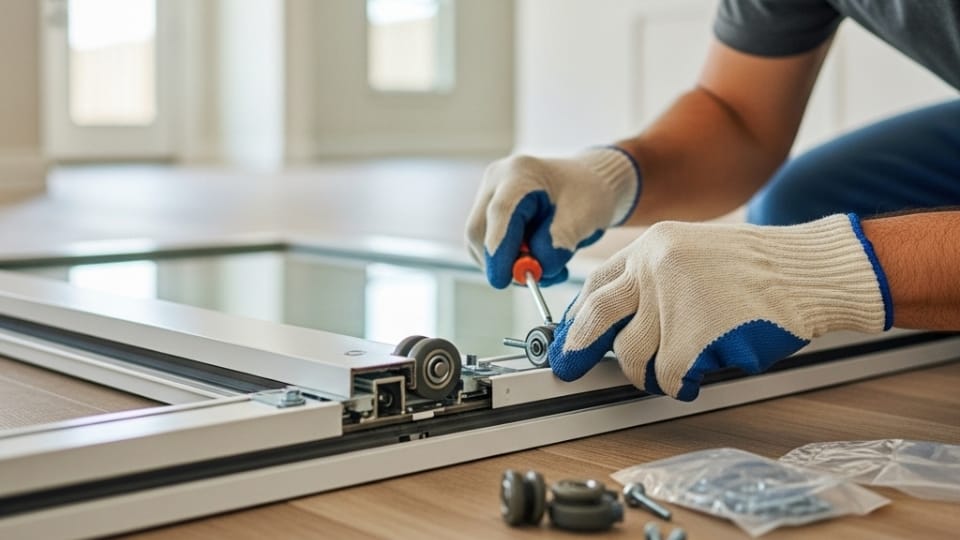 How to Repair Sliding Glass Door Rollers: Ultimate DIY Guide
Check the weatherstripping too. If it’s torn or dragging, replace it. A fresh seal keeps out rain, cold air, and that one mosquito with a personal vendetta.
Don’t Ignore the Frame
Sometimes the door isn’t the problem—the frame is. Check for loose screws along the track and frame. Tighten them carefully, because a wobbly frame can make even perfect rollers act up.
If the frame is bent or rusted, a pro may need to step in. That’s not a DIY failure. That’s just respecting the limits of a Saturday afternoon.
When to Call a Pro
Call a professional if the glass is cracked, the frame is bent, or the door is too heavy to safely lift. Also call if you’ve cleaned, lubed, and adjusted everything but the door still refuses to cooperate.
Some repairs need new rollers, a new track, or frame realignment. That’s not failure; that’s knowing when to stop wrestling with glass.
Keep It Sliding Smoothly
Vacuum the tracks once a month. Wipe them with a dry cloth. Spray silicone lubricant a couple times a year.
Tell everyone not to hang on the handle like it’s a monkey bar. And don’t slam the door. Sliding doors have feelings—or at least fragile rollers.
Now go open that door and enjoy the smooth whoosh. You’ve turned a daily annoyance into a tiny victory. And honestly, those are the best kind.
