How Do You Remove Algae From A Pool

One morning you peel back the pool cover and discover that your shimmering blue retreat has quietly become a bowl of split pea soup. It happens. Algae is patient, opportunisti...

One morning you peel back the pool cover and discover that your shimmering blue retreat has quietly become a bowl of split pea soup.
It happens. Algae is patient, opportunistic, and — let's be honest — a little smug about the whole thing.
The good news: you don't need a chemistry degree or a pool guy named Dave to win this fight. You need a brush, some patience, and a rough idea of what you're dealing with.
Must Read
Know Your Enemy (It's Older Than Trees)
Algae has been photosynthesizing for roughly two billion years, which means it had a very long head start on your Saturday plans.
It blooms when three things line up: sunlight, warm water, and something to eat — usually phosphates, nitrates, or plain old neglect.
Green algae is the classic: cloudy water, slippery walls, the full green-eyed-monster routine.
Mustard algae looks like pollen dust and shrugs off ordinary chlorine levels. Black algae clings in dark, waxy spots and digs its heels into the plaster.
Spores ride in on wind, rain, birds' feet, and damp swimsuits. You can't seal a pool off from the world — you can only make the water inhospitable.
Gather Your Kit
You'll want a stiff pool brush, a reliable test kit, chlorine shock, algaecide, and a filter you actually trust.
Also gloves. Maybe a shirt you don't love. Algae stains things, including your dignity.
A robotic cleaner helps, but nothing replaces elbow grease — brushing physically breaks the algae's protective layer so chemicals can finish the job.
Skip the upsell if you already own half of it. Most algae battles are won with chlorine, a brush, and clean filtration.
The Method, In Plain English
1. Brush Everything
Walls, floor, steps, ladders, light fixtures, waterline. Every surface, no shortcuts.
 How Do You Get Rid Of Algae In Your Pool | Detroit Chinatown
Brush toward the main drain so debris gets pulled into the filter instead of drifting back where it started.
2. Balance The Water
Test and adjust pH, alkalinity, and stabilizer before you shock. Chlorine works best when pH sits around 7.2 to 7.6.
If your cyanuric acid is sky-high, chlorine is effectively napping on the job. A partial drain and refill may be the honest answer.
3. Shock It, Hard
Use a chlorine shock at an algae-level dose — often two to three times the normal amount, or whatever the label's kill rate recommends.
Run the pump and let it circulate. The water may turn cloudy, then milky, then clear. That's the algae dying, not your plan failing.
4. Add Algaecide, Then Wait
Algaecide isn't a rescue swimmer — it's a bouncer. It keeps new algae from crashing the party while chlorine mops up the old crowd.
Give it twenty-four hours. Then brush again. Yes, again.
5. Clean The Filter
Backwash sand or DE filters, or hose off your cartridges. Dead algae has to leave the pool somehow.
Run the pump longer than usual for a few days. Plenty of people run it around the clock until the water clears.
Things That Speed This Up
Sunlight is chlorine's enemy — that's why stabilizer exists. But UV also kills free-floating algae, so a bright day isn't all bad.
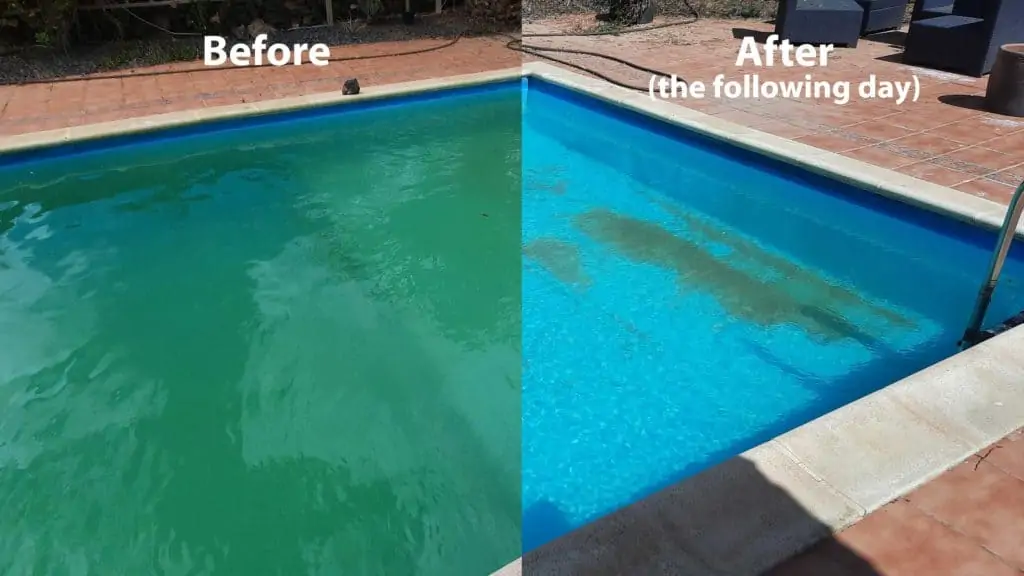
 Algae in Your Pool Causes and Effective Removal - Pooltivity
Warm water makes everything grow faster, which is why August is algae's favorite month and yours isn't.
Here's a fun one: the word pool once meant a small pond, and people swam in whatever was growing there. We've gotten pickier, and that's progress.
One caution — don't swim until free chlorine drops below about 5 ppm and the water is clear. Green water and red eyes are a miserable combo.
Keep It From Coming Back
Run your pump daily, keep chlorine in range, and shock weekly through peak season.
Skim leaves before they sink and rot. Phosphates adore decaying organic matter almost as much as you adore a clean pool.
Test the water twice a week. It takes two minutes and can save two hundred dollars.
A Small Thought Before You Dive In
Algae is a reminder that nature doesn't stop at your property line. Give anything — water, a garden, a habit — the right conditions, and it grows.
Slightly unnerving, and also useful.
Because the same rule works in your favor. Show up, brush the walls, test the water, repeat. Consistency is the real shock treatment.
Then towel off, grab something cold, and float. You've earned it.
