Does Treated Wood Need To Be Sealed

Your neighbor just built a deck. It smells like a lumber aisle and looks slightly damp. Now you’re staring at your own fence, wondering if it needs a spa day. Here’s the good...

Your neighbor just built a deck. It smells like a lumber aisle and looks slightly damp. Now you’re staring at your own fence, wondering if it needs a spa day.
Here’s the good news: treated wood is already a tough cookie. But that doesn’t mean sealing it is a waste of a Saturday. Let’s untangle this together.
What Does “Treated” Actually Mean?
Pressure-treated wood gets infused with preservatives under high pressure. Those chemicals sink deep into the wood fibers, not just sit on top. They fight off rot, termites, and fungus like a tiny internal security team.
Must Read
So the wood itself is protected from the inside out. Sealing, on the other hand, is a surface-level move. Think of it as sunscreen for your deck, not a vaccine for the lumber.
So, Does Treated Wood Need To Be Sealed?
Short answer: No, it doesn’t need it to survive. A pressure-treated board can sit outside for years without sealer and still hold up structurally. It will slowly turn a silvery gray, which some folks actually love.
But “survive” and “thrive” are different things. Sealing won’t make rotten wood new again, but it can slow down the aging process. It’s the difference between a well-worn leather jacket and one that’s cracked and peeling.
The Case for Sealing
Sunlight is brutal on wood. UV rays break down lignin, the natural glue that holds wood fibers together. Without protection, the surface dries, cracks, and gets that fuzzy, splintery feel.
Sealer acts like a raincoat and a sunblock in one. It keeps excess moisture out and locks some natural oils in. That means fewer cracks, less warping, and a smoother surface for bare feet.
It also helps your deck or fence keep its color. If you stained it a rich cedar tone, sealer slows the fade to gray. You get to enjoy that “just built” look a little longer.
 How to Keep Treated Lumber From Warping | 11 Easy Ways (2026)
The Case Against Sealing (or at Least Waiting)
New pressure-treated wood often comes wet from the store. It’s been soaking in preservative, and it needs time to dry out. If you seal it too soon, you trap that moisture inside, which can lead to mildew and peeling.
How long should you wait? Some say a few weeks, others say three to six months. A simple test: sprinkle a few drops of water on the board.
If it beads up, it’s still too wet. If it soaks in, you’re good to go.
Also, not every piece of treated wood needs a makeover. A hidden joist under your deck? It doesn’t care about UV rays or beauty. Save your sealer for the boards you actually see and touch.
When You Can Absolutely Skip It
Fence posts, structural framing, and raised garden beds are good candidates for the “leave it alone” approach. They’re either underground, behind the scenes, or not something you run your hand along.
If you’re building a raised bed for vegetables, check what the wood was treated with. Modern treatments are generally considered safe for plants, but some gardeners still line the inside with plastic. Sealing can reduce chemical leaching, but it’s not a requirement.
And if you love the weathered gray look? Congratulations, you just saved yourself a chore. Mother Nature will handle the finish for free.
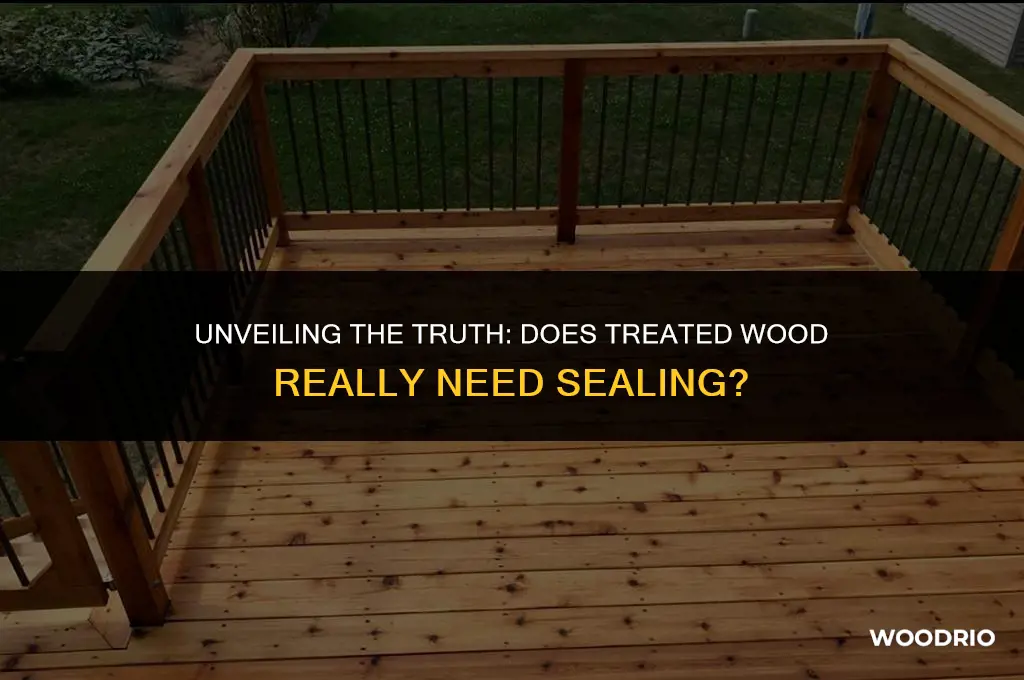 Unveiling The Truth: Does Treated Wood Really Need Sealing? | WoodRio
How to Seal Without Losing Your Weekend
First, clean the wood. Dirt, mildew, and old flaking stain will ruin your new coat. A quick scrub with a deck cleaner and a stiff brush does wonders.
Let it dry completely, then choose a sealer or stain-sealer combo. Oil-based formulas penetrate deeper, while water-based ones are easier to clean up. Both work fine for most homeowners.
Apply thin coats with a brush, roller, or sprayer. Two coats are usually better than one thick gloopy layer. And don’t forget to back-brush puddles so they don’t dry unevenly.
Reapply every two to three years, depending on sun and foot traffic. Think of it like changing the oil in your car. A little routine maintenance prevents a big headache later.
The Bottom Line
Treated wood doesn’t need to be sealed to do its job. It will resist rot and bugs all on its own, thank you very much. But sealing makes it look better, feel smoother, and last longer against the sun and rain.
So ask yourself: do you want a rugged, graying deck that’s proud of its wrinkles? Or a protected, polished surface that stays prettier for years? Either choice is valid.
Just don’t seal wet wood, and don’t stress about perfect timing. Your deck isn’t judging you. It’s just happy to hold your grill and your flip-flops.
