How To Find Flame Sensor On Furnace

Your furnace has a tiny superhero. It lives inside the flame. Its job? Prove the fire is real. That little hero is the flame sensor. It’s also the reason your furnace sometime...
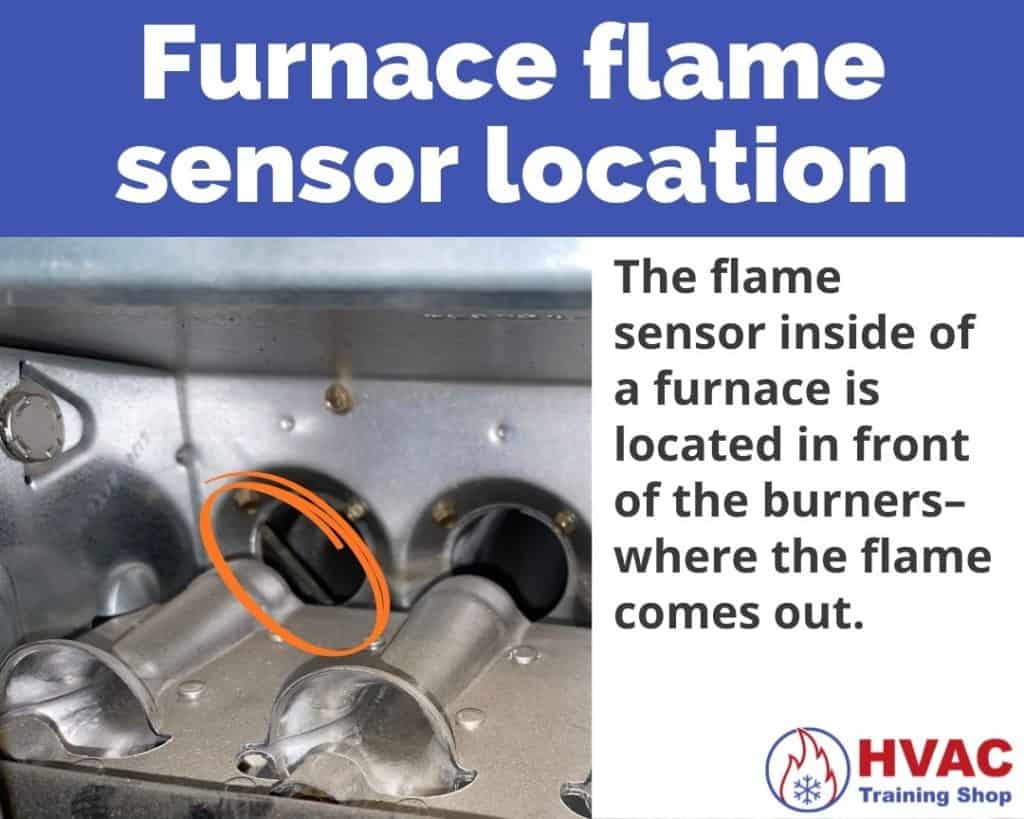
Your furnace has a tiny superhero. It lives inside the flame. Its job? Prove the fire is real.
That little hero is the flame sensor. It’s also the reason your furnace sometimes quits for no obvious reason.
Finding it is part detective work, part scavenger hunt. The good news: you don’t need a cape. Just a flashlight, a screwdriver, and mild curiosity.
Must Read
What a Flame Sensor Actually Does
When your furnace starts, gas flows and the igniter lights the burners. The flame sensor then checks for fire.
It sits in the flame and senses a tiny electrical current. We’re talking microamps—a whisper of electricity.
If it doesn’t feel that current, it tells the furnace, “Nope, no flame here.” The furnace shuts off the gas for safety.
That’s why a dirty sensor can cause big drama. A speck of soot can block the signal.
Where to Start Looking
First, turn off power to the furnace. Flip the switch on the side of the unit or use the breaker.
Give it a minute. You want the blower and burners to stay quiet while you explore.
Now open the furnace door. Usually, it’s the front panel with screws or tabs.
Inside, you’ll see the burner compartment. That’s the metal area where flames do their thing.
Look Near the Burners
The flame sensor lives near the burners. Not on the outside. Not in the blower motor. Near the fire.
It’s often a skinny metal rod. Think of a tiny wand or a dental tool.
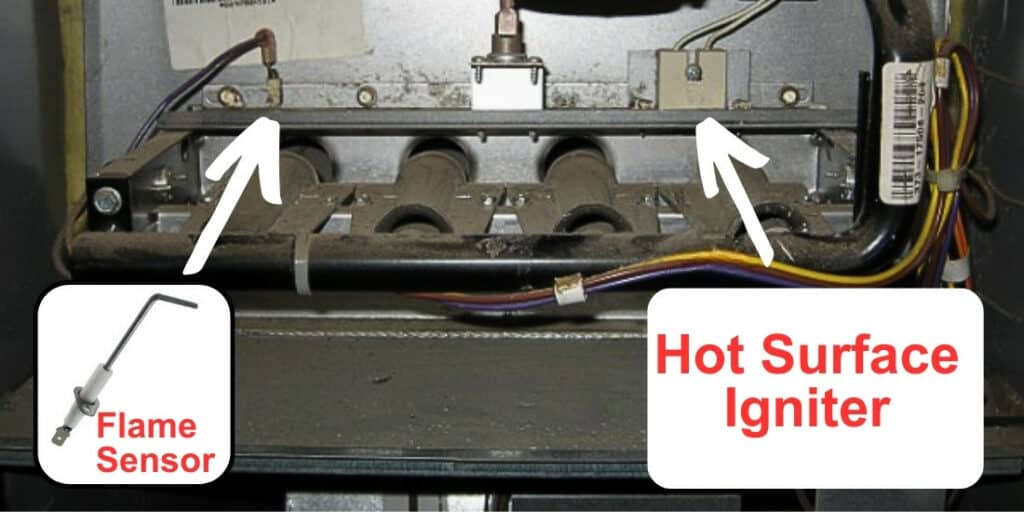
At its base, you’ll usually see a white or cream-colored ceramic insulator. That’s a big clue.
There’s often just one wire attached to it. One wire, one rod, one job.
Don’t Confuse It With the Igniter
The igniter is the show-off. It glows orange or white and looks fragile.
The flame sensor is the quiet one. It doesn’t glow. It just sits there, judging the flame.
If you see a delicate, glowing part with two wires, that’s likely the igniter. Step away gently.
The sensor is usually more sturdy and plain. It might look slightly dirty or grey.
Follow the Bracket
Many flame sensors are mounted on a small metal bracket. That bracket screws into the burner assembly.
 How To Find Flame Sensor On Furnace - Electronic Sensor Blog
Sometimes the sensor points right into the flame path. Other times it sits just above or beside the burner.
If you see a rod aimed at where the flame would be, you’re probably staring at it.
Take a photo before touching anything. Your future self will thank you.
Common Hiding Spots
On many furnaces, the sensor is on the left or right side of the burner row. It depends on the brand.
Some models tuck it behind a small metal shield. That shield protects it from heat and debris.
Others place it near the front, close to the door. Easy to spot once you know the shape.
If you have a high-efficiency furnace, the burners may be in a sealed compartment. You might need to remove a cover.
When You Still Can’t Find It
Grab your phone. Search your furnace’s model number plus “flame sensor location.”
Look for a diagram or a parts breakdown. Those images are gold.
You can also check the manual. Yes, the manual. It’s boring, but it knows things.
If all else fails, call a technician. They find these things in their sleep.
Tools That Make the Hunt Easier
Grab a flashlight. Phone flashlights work, but a real one frees up your hands.
A screwdriver helps if the door or burner cover is screwed shut. Keep a small container for screws. They love to run away.
Your phone camera is your best friend. Snap photos before and after. Especially where that one wire connects.
Safety, Because Fire Is Still Fire
Always kill the power before poking around. The furnace might look asleep, but it can wake up fast.
If you smell gas, stop. Leave the house. Call your gas company or a pro from outside.
Never yank wires or force parts. Furnace components are tougher than they look, but not that tough.
 Trane Furnace Flame Sensor Cleaning at Wade Arnold blog
When in doubt, shut it down and call a technician. Your ego will survive.
Flame Sensor vs. Thermocouple
People mix these up all the time. A thermocouple is a different safety device, often found on older standing-pilot furnaces.
A flame sensor usually works with an electronic ignition. It’s a rod in the flame, not a bulb-like probe.
If your furnace has a pilot light that burns year-round, you might have a thermocouple. If it clicks and lights, you likely have a flame sensor.
If You Find It, Now What?
You found the little rod. Victory dance optional. Now you can inspect it.
If it looks sooty or white, it may need a gentle clean. Use fine steel wool or a soft cloth. Don’t scrub like you’re removing rust from a boat.
Bend it, and you might change how it sits in the flame. That can cause more problems. Be gentle.
Put everything back, restore power, and see if the furnace behaves. If not, call a pro.
Why This Is Weirdly Fun
The flame sensor is a tiny safety device that runs on a magical-sounding principle. Fire can conduct electricity. That never stops being cool.
It’s also a hidden cause of many “furnace won’t heat” mysteries. People replace big parts while the real culprit is a dirty little rod.
Cleaning it is often simple. But finding it is the first thrill.
You’re basically hunting a metal toothpick that controls your comfort.
Quick Recap for Your Brain
Turn off power. Open the furnace. Look near the burners.
Find a single-wire rod with a ceramic base. Don’t grab the glowing igniter.
When in doubt, check the manual or search your model number. Then proceed carefully.
And if you get nervous, remember: the flame sensor is small, but it’s not scary.
It’s just a tiny guard keeping your house safe. Give it a little respect.
