Snow Cave And Igloo Which Is Warmer

Ask most people whether they’d rather sleep in a snow cave or an igloo, and they’ll probably choose the hotel. Fair enough. Both are bedrooms made of frozen water, and both ca...

Ask most people whether they’d rather sleep in a snow cave or an igloo, and they’ll probably choose the hotel. Fair enough. Both are bedrooms made of frozen water, and both can keep you surprisingly comfortable when the mercury drops.
But which is warmer? The honest answer is it depends. A well-built igloo usually wins on engineering; a snug snow cave can win on speed and simplicity.
Snow Is a Strange Kind of Blanket
Snow doesn’t feel warm, obviously. Yet fresh snow is roughly 90 percent air, and air is a terrible conductor of heat. A thick snow wall works like a down jacket for your shelter.
Must Read
Inside, your body becomes the radiator. In a small, ventilated space, human heat can raise the temperature to around freezing even at minus 40. That’s the magic trick of every Arctic shelter.
Still, not all snow is equal. Packed blocks are strong and insulative; powdery snow is colder and less stable. An igloo is custom furniture; a snow cave is a hollowed-out couch cushion.
Igloo: The Original Dome Home
The word igloo comes from Inuktitut, and it simply means “house.” Inuit builders have made these structures for centuries using snow knives and teamwork. The classic dome is a masterpiece of physics and patience.
Blocks spiral upward, each one leaning on its neighbors. An entrance tunnel sits lower than the living area, creating a cold trap where dense cold air settles. The sleeping platform stays higher and warmer.
That layout matters. Heat rises, cold sinks, and the tunnel keeps winter from your bedroom. A skilled igloo can be warmer than a tent and quieter than a library.
Fun fact: a single candle—used carefully—can make an igloo almost balmy. But too much heat melts the ceiling into an icy glaze. Cozy has limits.
Today, Arctic tourism turns igloos into ice hotels and glass domes, but Inuit knowledge came first.
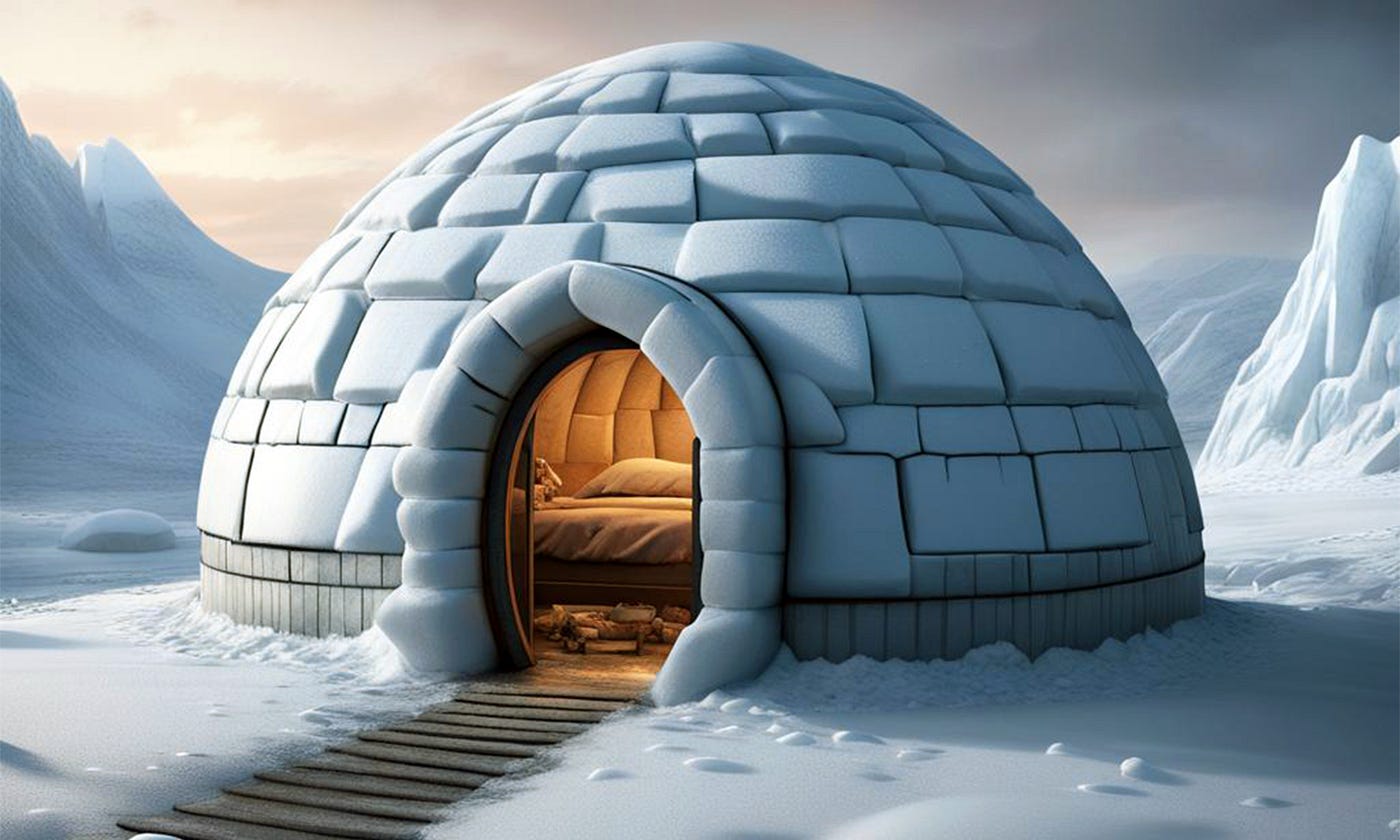 Inside Igloo
Snow Cave: The Speedy Cousin
A snow cave is usually dug into a snowbank, drift, or hillside. It’s less architectural, more improvisational—like baking a cake versus hollowing out a watermelon. You need a shovel, a plan, and a fear of collapse.
Good snow caves are small, with a low entrance and a raised sleeping shelf. The ceiling should be arched, so melting drips run down the walls instead of onto your nose. Ventilation is non-negotiable.
Because a snow cave often has less volume, it can heat up fast. Your body heat and breath warm the air quickly. But loose snow or a thin roof can make it a cold, damp coffin. Preparation beats poetry.
In an emergency, a snow cave can save your life. In casual camping, it feels like a secret clubhouse. Either way, it rewards humility more than ego.
So, Which One Is Warmer?
For pure warmth, a well-built igloo generally takes the prize. Its dome shape, block walls, cold trap, and elevated platform manage heat and cold with precision.
A well-dug snow cave can be just as warm, though. In deep, dense snow, it may feel warmer because it’s smaller and protected from wind. The catch is that it’s easier to do badly.
Think of it this way: an igloo is a tailored winter coat. A snow cave is a giant hoodie you found in the snow. Both keep you warm, but one has better seams.
 Glacier Glamping: 25 of the Coolest Ice Hotels, Igloo Villages, and Caves
Practical Tips for Either Shelter
Pack a shovel, snow saw, and probe in serious snow. Never build under a cornice or on a slope that could slide. Tell someone your plans.
Keep a ventilation hole open—at least the size of a fist. If you feel sleepy, headachy, or confused, get outside. Carbon monoxide doesn’t announce itself.
Insulate your floor with a foam mat, pine boughs, or extra packs. Wear dry layers and avoid sweating before bed. Use a candle for light, never instead of ventilation.
Mark the entrance with a pole or bright fabric. Keep gear organized, and don’t cook inside without ventilation. Discipline separates adventure from incident report.
A Small Reflection for Everyday Warmth
Maybe the snow cave versus igloo debate feels remote if your biggest winter concern is a drafty apartment. But the lesson travels. Warmth isn’t only about thick walls; it’s about design, boundaries, and breathable space.
A cozy home, like a good shelter, needs insulation and ventilation. It needs a low entrance for cold and a high shelf for rest. It needs people who know when to seal up and when to let air in.
So whether you’re dreaming of an Arctic dome or just trying to survive until spring, remember: the warmest places are rarely the most sealed. They’re built with care, shared with others, and smart enough to leave room to breathe.
