How To Tell If A Wall Is Insulated

Walls are the quiet roommates of your house. Some are cozy and keep the heat in, and some are basically cardboard with trust issues. You can learn a lot about a wall without t...

Walls are the quiet roommates of your house. Some are cozy and keep the heat in, and some are basically cardboard with trust issues. You can learn a lot about a wall without tearing it open, though you may need to get nosy.
Here's the catch: insulation is only half the story. Air sealing is the other half, and they are not the same thing. A wall can be stuffed with insulation and still leak air like a sieve wearing a sweater.
Low-Tech Clues
Start With Your Hand and Your Face
On a cold day, walk around and touch exterior walls. An insulated wall should feel closer to room temperature, while a bare one feels like a soda can from the fridge. If you recoil like you touched a ghost, that's a clue.
Must Read
Try comparing an exterior wall to an interior wall in the same room. Interior walls usually feel neutral because they don't separate you from the outdoors. A dramatic difference on an exterior wall suggests weak insulation or an air leak.
On a hot day, the reverse happens. An insulated wall stays cooler to the touch, while an uninsulated one may feel like the side of a parked car in July. Your hand is not a precision instrument, but it is free and always available.
The Classic Knock Test
Knocking on a wall is the folk magic of home inspection. A hollow sound can mean an empty cavity, but it can also mean normal drywall over studs. A dull thud might mean insulation, or thick plaster, or a previous owner's secret stash of bowling balls.
So knock if you must, but don't make life choices based on it. The knock test is a hint, not a verdict. It's like diagnosing a headache by tapping your forehead.
Remove an Outlet Cover (Carefully)
This one can be revealing, but you must respect electricity. Turn off the breaker, use a non-contact voltage tester, and never jam anything into the box. If you are not comfortable, call an electrician or an energy auditor.
Once the cover is off, shine a flashlight beside the electrical box. You might see pink, yellow, or white insulation batts. That is a good sign, though not a guarantee for the whole wall.
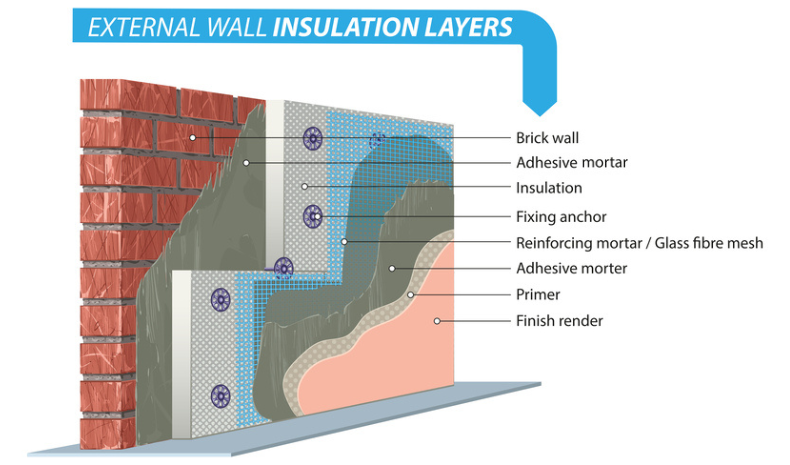 Wall Insulation Diagram Solid Wall External House Insulation | EWI
If you see a hollow cavity and feel a breeze, you have found an air leak. Surprising fact: many “cold wall” complaints are actually air leaks, not missing insulation. Insulation slows heat; air sealing stops the wind from throwing a party in your living room.
High-Tech Clues
Borrow a Thermal Camera
A thermal camera turns temperature into a color show. On a cold day, insulated sections usually look warmer, while missing insulation shows up as cold blue patches. You may even see stripes where studs conduct heat differently than the insulated cavities.
But thermal cameras are drama queens. Sunlight, furniture, radiators, and air leaks can confuse the picture. Use one as a clue, preferably with a professional who knows how to interpret it.
Many libraries and hardware stores rent thermal cameras. If you borrow one, test several walls and compare results. A single weird spot might be a leak, a shadow, or a ghost with a cold hand.
Look for Drafts and Noise
Insulation also helps with sound. An uninsulated wall often lets you hear your neighbor's television, arguments, or questionable karaoke. If every conversation comes through the wall like a radio drama, insulation may be missing.
Drafts are trickier, because a drafty wall may be insulated but poorly air-sealed. Check around outlets, baseboards, and window frames with an incense stick or a tissue to spot moving air.
 Wall Insulation Diagram Solid Wall External House Insulation | EWI
Just don't confuse a draft with a ghost. Ghosts are colder and less likely to raise your energy bill, though they may still be annoying.
Big-Picture Clues
Check the House's Age and History
Houses built before the 1950s often have little or no wall insulation. Homes from the 1950s through the 1970s might have some, depending on the builder's mood and budget. Modern homes are usually insulated to code, but renovations can hide all kinds of surprises.
Look for old photos, inspection reports, or renovation receipts. If a previous owner insulated the walls, there may be evidence. If not, you are playing detective with drywall.
When to Call a Pro
The most reliable method is a professional energy audit. An auditor uses a blower door, infrared camera, and experience to find insulation gaps and air leaks. That beats guessing with your knuckles and a flashlight.
If your walls are cold, drafty, noisy, and your energy bills look like a ransom note, get help. You can add insulation or air sealing, but the right fix depends on what is actually wrong.
Think of insulation as a sweater and air sealing as a windbreaker. You want both. Otherwise, your house is just wearing a sweater in a hurricane and wondering why it's still cold.
