How Much Does A Bale Of Hay Weigh

Last summer, a neighbor asked me to help move “just a few bales.” I pictured fluffy pillows with strings. The first one felt like a refrigerator wearing a jacket. My back stil...

Last summer, a neighbor asked me to help move “just a few bales.” I pictured fluffy pillows with strings. The first one felt like a refrigerator wearing a jacket. My back still sends me passive-aggressive reminders.
That afternoon taught me a lesson I should have learned from every farm meme: “a bale of hay” is not a single weight. It’s a category, like “vehicle” or “sandwich.” Ask a simple question, get a wonderfully annoying answer: it depends.
The Short Answer Nobody Loves
Small square bales often weigh 40 to 60 pounds. Two-string bales tend to sit around 40–50 pounds, while three-string bales can run 60–100 pounds. If it’s alfalfa and packed tight, your arms will file a complaint.
Must Read
Round bales are a different species. They commonly weigh 600 to 2,000 pounds or more, depending on size and density. Large square bales land in the same heavyweight range, often 600–2,500 pounds.
So when someone says, “A bale weighs X,” ask, “Which bale?” That’s like asking how much a dog weighs. Chihuahua or St. Bernard?
Why Hay Bales Vary So Much
Size and shape
Small squares are designed for human hands, more or less. Round bales are designed for tractors and strong opinions. A 4x5 round bale and a 5x6 round bale can differ by hundreds of pounds.
Density
Density is the sneaky variable. A loose bale feels airy. A tightly packed bale feels like a concrete block wrapped in twine. Modern balers can pack hay with shocking force.
Moisture
Moisture adds weight fast. Hay should be baled dry, usually around 12–18% moisture. Wet hay is heavier, molds, heats, and can even spontaneously combust. That’s not the cozy kind of hot.
Plant type
Alfalfa is leafy and dense, so it usually weighs more than grass hay at the same size. Timothy, orchard grass, and other grasses tend lighter. Legumes like clover can also push the scale up.
 Estimating hay needs, size, weights and costs
Typical Weights by Bale Type
Small square bales
Common two-string bales: 40–60 pounds. Three-string bales: 60–100 pounds. If you can carry one under each arm while chatting, it’s probably not the heaviest alfalfa on the market.
Round bales
A 4x4 might weigh 400–800 pounds. A 4x5 often runs 600–1,100 pounds. A 5x5 can hit 800–1,500 pounds, and a 5x6 can easily exceed 2,000 pounds.
Large square bales
A 3x3x8 bale might weigh 600–1,000 pounds. A 3x4x8 can run 800–1,500 pounds. A 4x4x8 may weigh 1,500–2,500 pounds or more. These are moved with equipment, not enthusiasm.
Why You Should Care About Bale Weight
If you feed livestock, weight tells you how much hay you’re actually buying. A “bale” is not a standardized unit. Two bales can look identical and differ by 500 pounds.
For hauling, weight affects trailer capacity, truck payload, and whether your tires squat like sad balloons. For pricing, many sellers price by ton rather than bale for good reason.
For your back, weight decides whether you unload by hand or call in a tractor, skid steer, or chiropractor. Your spine votes for knowing the number.
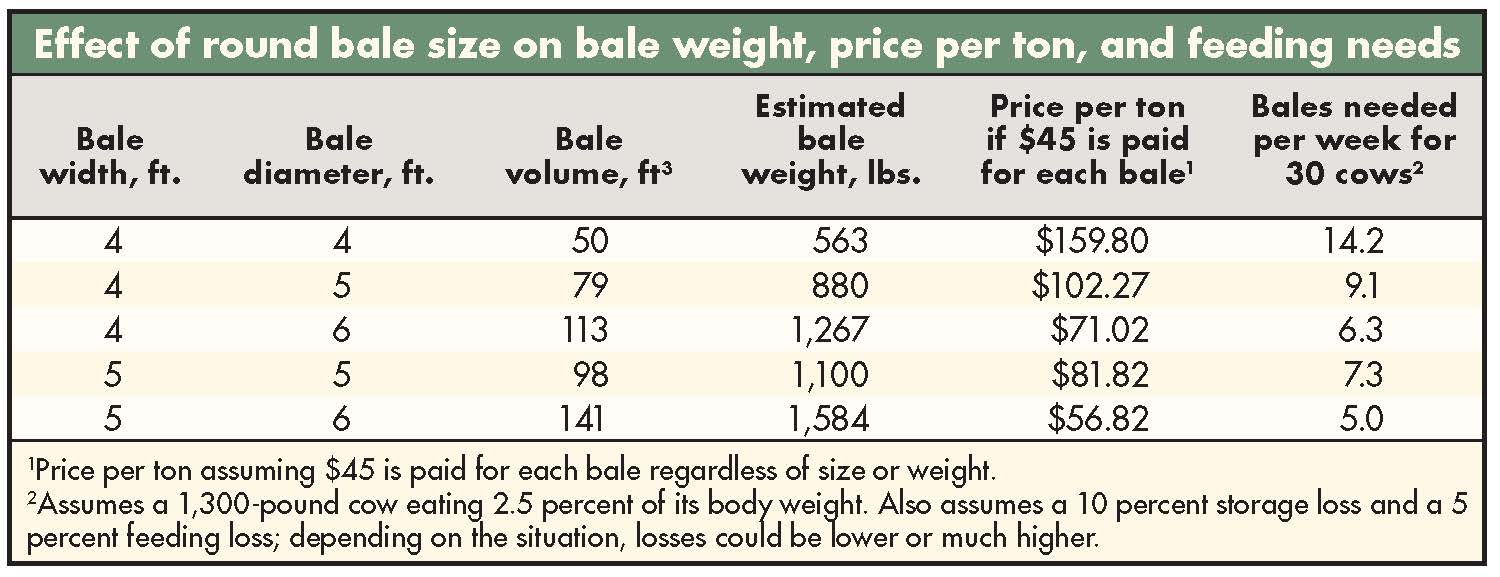 How Much Is a Round Bale of Hay Weigh
How to Estimate a Bale’s Weight
First, identify the bale type and dimensions. Then ask the seller or check a scale ticket. If there’s no scale, use a livestock scale or calculate from density and volume.
You can also use a truck scale: weigh the truck empty, load the bales, weigh again, then divide by the number of bales. That’s more reliable than guessing by grunt.
When in doubt, assume hay is heavier than it looks. Lift with your legs, not your ego. Or supervise a friend while offering excellent advice. Friendship is a beautiful thing.
Bottom Line
A small square bale usually weighs 40–60 pounds. A round bale usually weighs 600–2,000+ pounds. Large squares are also heavyweight contenders.
The real answer is that a bale of hay weighs as much as it needs to, depending on size, density, moisture, and plant type. Next time someone asks, smile and say, “Which kind of bale?”
Then step aside, and maybe stretch first. The hay might be light. The question is not.
