How Do You Say Austin In Spanish

You’re standing in a taco line in Austin, and someone asks, “¿Cómo se dice Austin en español?” You freeze for a second and wonder if it’s Austino, Augustín, or some secret wor...

You’re standing in a taco line in Austin, and someone asks, “¿Cómo se dice Austin en español?” You freeze for a second and wonder if it’s Austino, Augustín, or some secret word. Relax. The answer is simpler than the salsa options.
The short answer is beautifully boring: Austin stays Austin. Spanish doesn’t usually rename a city just because it was named after an English-speaking guy. It borrows the word and gives it a Spanish accent.
That accent is where the fun lives. Many Spanish speakers say it as Óstin, roughly “OH-steen.” The English “aw” gets tucked into a clean Spanish “o,” like a shirt ironed by someone with too much time.
Must Read
Why Austin Doesn’t Become Austino
Think about how Spanish handles other city names. New York becomes Nueva York, London becomes Londres, and Munich becomes Múnich. Those are old names with long histories, so Spanish bent them into new shapes.
Austin is different. The Texas city was named after Stephen F. Austin, so there’s no ancient Spanish map label waiting for it. Spanish just says, “Okay, Austin,” and moves on.
That’s why you won’t find a secret translation in a dusty dictionary. It’s like asking how to say “Brooklyn” in Spanish. The answer is “Brooklyn,” probably with a shrug and a bagel.
But What About the Name Austin?
Here’s where things get fun. If you mean the city, it’s Austin. If you mean a person named Austin, Spanish has a cousin: Agustín.
Austin is related to Augustine, which became Agustín in Spanish. Your buddy Austin from Dallas might become Agustín at a family cookout in Mexico. He might not answer at first, but he’ll learn.
It’s similar to John becoming Juan or Joseph becoming José. Not a perfect match, but close enough to share a last name and a plate of tamales.
How It Sounds in Real Life
At a taqueria, you might hear, “Vivo en Óstin.” At a conference, someone might say, “Vengo de Austin, Texas.” Both are correct.
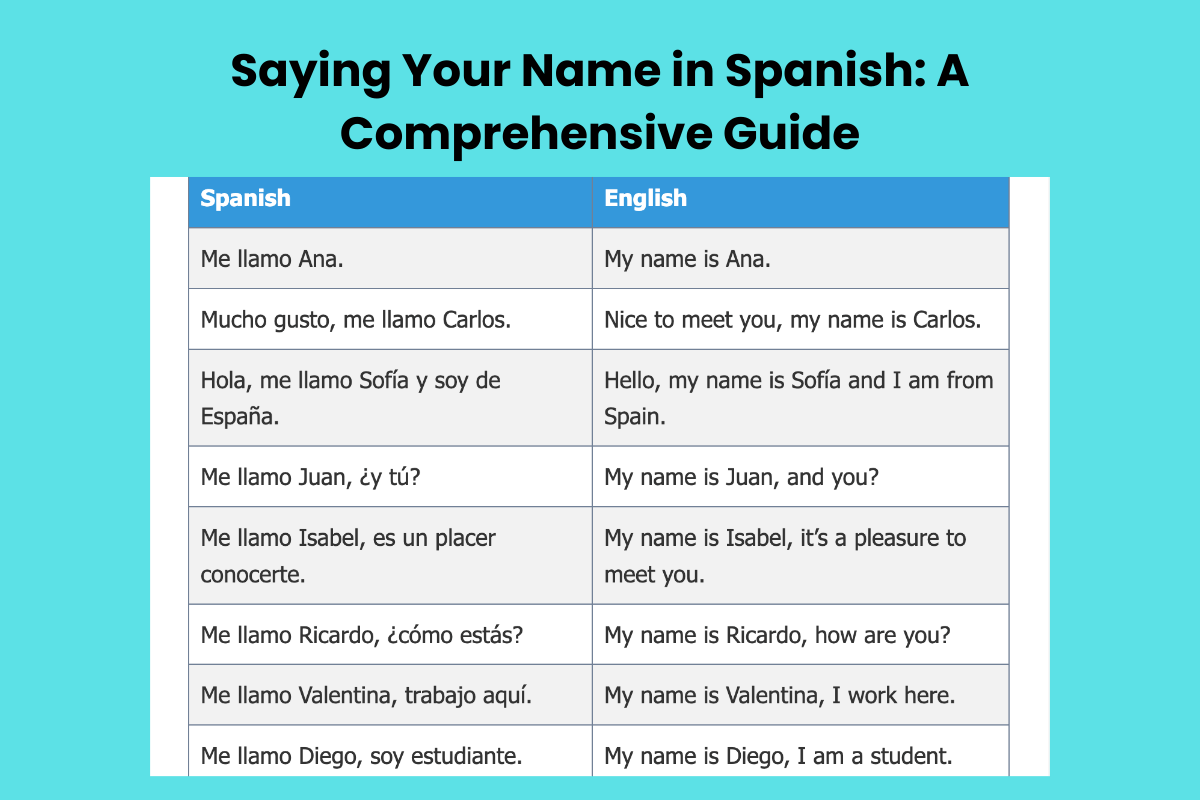 Saying Your Name in Spanish: A Comprehensive Guide - GrammarCrack.com
You’ll also hear Spanglish magic: “Voy pa’ Austin, bro.” That’s not a grammar emergency. That’s just how people talk when they’re hungry and running late.
If you try to say “Austin” with a thick Spanish accent, you might get OW-steen or Óstin. Nobody at the taco truck will grade you. They’ll just ask if you want corn or flour tortillas.
I once heard a waiter in South Austin ask, “¿Austin o Óstin?” A customer panicked and said “Agustín?” The waiter laughed and brought him a margarita anyway. That’s the real language lesson.
A Tiny Warning About Ostión
Óstin sounds a little like ostión, which means oyster. So if you say “Voy a Ostión,” someone might picture you swimming to a giant mollusk.
In writing, this is easy to fix: write Austin. In speech, context saves you. You’re not likely to order a seafood platter by accident when you’re complaining about I-35 traffic.
How to Use It in a Sentence
“Voy a Austin” means “I’m going to Austin.” “Vivo en Austin” means “I live in Austin.” “Soy de Austin” means “I’m from Austin.”
Notice there’s no “el” in front. You don’t say “Voy al Austin” unless you’re trying to sound mysterious. Spanish usually lets city names walk around without an article.
 How to say Austin in Spanish - YouTube
You can also say “Austin está bien padre” if you want to sound casual and a little Mexican. It means “Austin is pretty cool.” Use it wisely, preferably over breakfast tacos.
A Quick Cheat Sheet for Your Brain
City in Texas: Austin or Óstin. Person named Austin: Agustín. Taco order: al pastor, no debate.
If you’re writing an email, use Austin. If you’re chatting with your suegra, try Óstin and watch her nod. If you’re naming a baby, maybe go with Agustín and save everyone the spelling confusion.
Spanish is not a picky bouncer at a club. It’s more like a friendly neighbor who lets you bring your own pronunciation to the barbecue. Just don’t call the city Austinton.
The Only Rule You Need
If you’re talking about the city, say Austin or Óstin. If you’re talking about a person named Austin, Agustín is your Spanish-side cousin.
That’s it: no secret conjugation, no dramatic translation, just a proper noun putting on a light Spanish accent and heading out for migas.
So the next time someone asks, “¿Cómo se dice Austin en español?” you can smile and say, “Austin.” Then pause, tilt your head, and add, “Óstin if you’re feeling local.”
