How To Fix Lath And Plaster Wall

So your wall has that historic charm—and also a crack that looks like a tiny lightning bolt. Good news: lath and plaster isn’t fragile magic. It’s a system, and systems can be...

So your wall has that historic charm—and also a crack that looks like a tiny lightning bolt. Good news: lath and plaster isn’t fragile magic. It’s a system, and systems can be repaired.
You don’t need a contractor’s license or a time machine. You need patience, a few cheap supplies, and the willingness to make a little dust. Yes, dust. The glamour is off the charts.
First, Meet Your Wall
Lath and plaster walls are built in layers. Narrow wood strips, called lath, sit behind several coats of plaster. The plaster squeezes through the gaps and forms “keys” that hold everything in place.
Must Read
When those keys break, the plaster can crack, bulge, or sag. Old houses shift, moisture sneaks in, and sometimes a doorknob wins a fight. None of that means the wall is doomed.
Gather Your Gear
You’ll want patching plaster or setting-type joint compound, fiberglass mesh tape, a putty knife, and a mixing bucket. Add a drill, drywall screws, plaster washers, sandpaper, and primer. A shop vacuum is your new best friend.
If your home was built before 1978, test for lead paint before sanding. Wear a mask and eye protection, and keep kids and pets away from the work zone. Safety first, superhero.
Prep Without Panic
Clear the area and cover the floor. Remove loose plaster, peeling paint, and crumbling bits with a putty knife. Vacuum the dust so your patch has a clean surface to grab.
For loose sections, find the studs behind the wall. Drive drywall screws with plaster washers into the studs to pull the plaster tight. Don’t overtighten—you’re repairing the wall, not crushing it.
 Lath and plaster | Plaster walls diy, Diy plaster, Plaster repair
Fix Small Cracks
Small cracks are the easiest win. Widen the crack slightly with a putty knife, then remove the dust. Press patching compound into the crack with a flexible knife.
Cover the repair with mesh tape, then add another thin coat of compound. Let it dry, sand lightly, and repeat until the surface feels smooth. Two thin coats beat one gloppy mountain.
Patch Big Holes
For holes larger than a fist, cut the damaged area into a clean square or rectangle. Add wood backing or a piece of drywall behind the opening, then screw it in place. Cut a drywall patch to fit, screw it to the backing, and tape the seams.
If you want to stay true to plaster, build up the patch with setting compound in thin layers. Feather the edges wide so the repair blends into the surrounding wall. Blending is everything.
Tame Bulges and Sagging Spots
A bulge usually means the plaster has pulled away from the lath. Reattach it with plaster washers and screws, working from the center outward. If the plaster is crumbly or soft, remove that section and patch it properly.
Sometimes you can inject adhesive behind a loose spot for extra grip. Just don’t glue over active moisture—fix the leak first. Water always wins until you stop inviting it in.
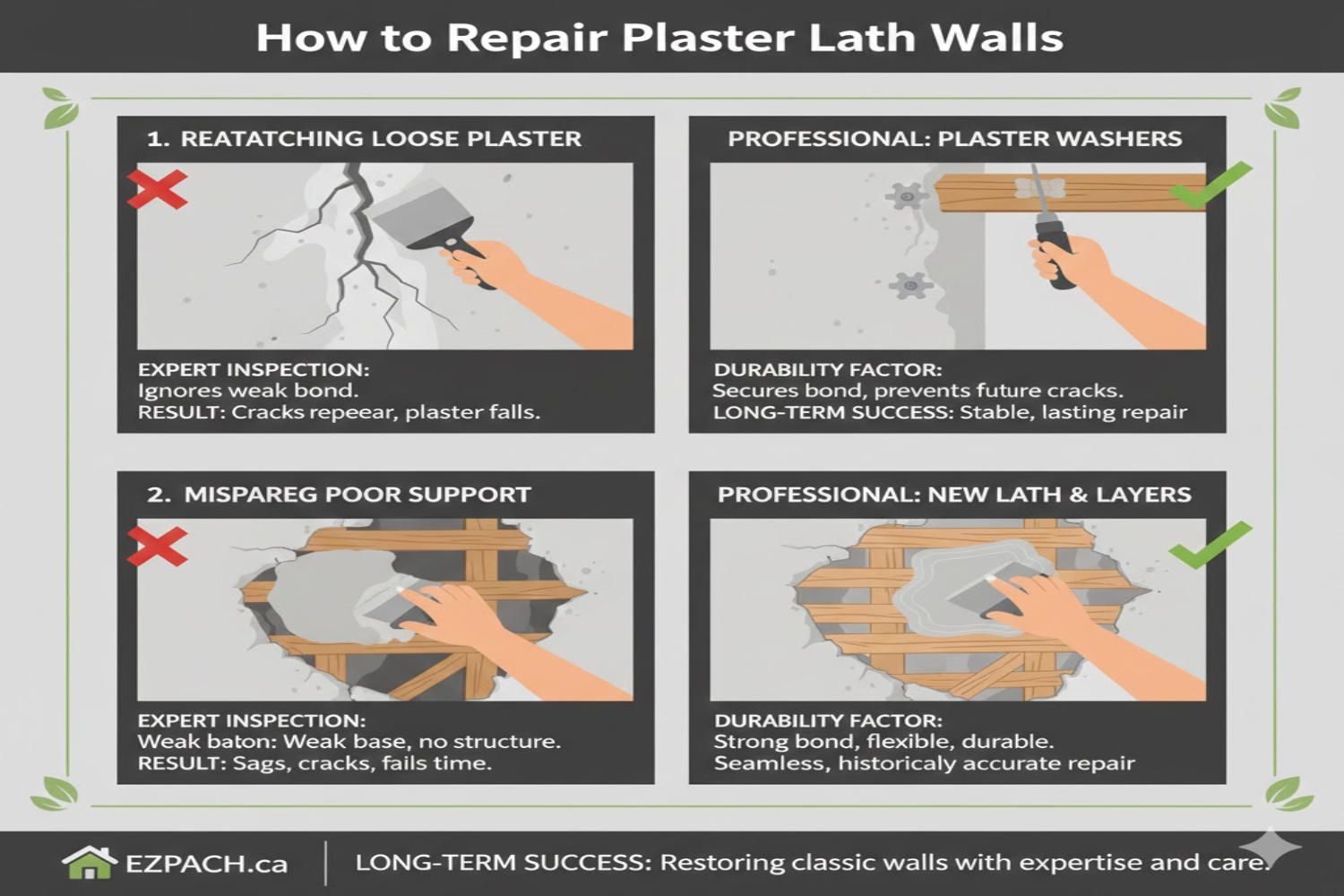 How to Repair Plaster Lath Walls - EZ PATCH
Make It Invisible
Once everything is dry, sand gently and wipe away dust. Prime the patched areas before painting, or the repair will flash like a neon sign. Then paint the whole wall, corner to corner, for a seamless finish.
Feather, prime, paint, admire. That’s the whole rhythm. You just did architecture.
If a patch looks lumpy, don’t panic. Let it dry, scrape it flat, and add a thinner coat. Mud is forgiving, and so is a wall that finally stops shedding plaster.
Why This Is Secretly Fun
Fixing lath and plaster connects you to the people who built your home. You’re solving a puzzle with your hands, not just swiping past another video. Plus, every smooth patch feels like a tiny victory.
The wall doesn’t have to be perfect—it has to be solid, safe, and ready for another century. Your effort adds character, literally and figuratively. Old houses reward the curious.
So grab a putty knife and give that battered wall some love. Start small, learn as you go, and celebrate every dust-free corner. You’re more capable than you think, and your home is lucky to have you.
