How Many Head Of Cattle Per Acre

Ask five ranchers how many cattle fit on an acre, and you’ll get six opinions, two jokes about city folks, and a thermos of coffee you didn’t ask for. That’s because the hones...
Ask five ranchers how many cattle fit on an acre, and you’ll get six opinions, two jokes about city folks, and a thermos of coffee you didn’t ask for. That’s because the honest answer is a shrug dressed up in boots. It depends on the land, the weather, the cows, and whether your neighbor Earl is borrowing your fence again.
Still, you came for a number. In good green pasture, a common rule is one cow-calf pair per two to five acres. In dry country, that same pair might need twenty, thirty, or even a hundred acres. So “head per acre” is really “acres per head,” and the math changes faster than a toddler’s mood.
Think of It Like Parking
Imagine you’re hosting a party and the driveway is the pasture. A lush Kentucky field is a big empty parking lot. A scrubby Arizona range is a narrow alley behind a taco stand. You can fit a lot more cars in the parking lot, obviously.
Must Read
Cattle are the cars. Each cow is roughly an animal unit, which is a fancy way of saying one thousand pounds of grazing appetite. A mature cow eats about 2% to 2.5% of her body weight in dry matter every day. That’s around twenty-five pounds of grass, hay, and browse—not including the drama.
The Actual Math, Without the Headache
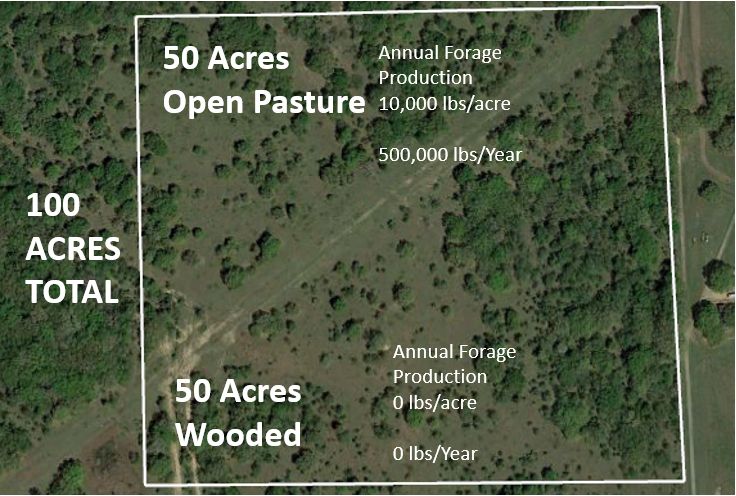
Let’s say your pasture produces 3,000 pounds of usable forage per acre in a year. A cow needs about 9,000 pounds of forage annually, give or take. So one cow needs roughly three acres, and you’d better leave some grass for next year.
That’s why ranchers talk about stocking rate. It’s not how many cows you can cram in for a weekend. It’s how many the land can feed without turning into dirt over the long haul.
If you overstock, you get the classic signs: bare patches, weeds, dust, and cows looking at you like you forgot the hay. Understock, and you’ll have grass up to your armpits and a mower bill that makes you rethink your life choices.
Rain Changes Everything
Rainfall is the boss. A farm in Iowa might happily run one cow per acre on improved pasture. A ranch in West Texas might need thirty acres per cow. The desert doesn’t care about your business plan.
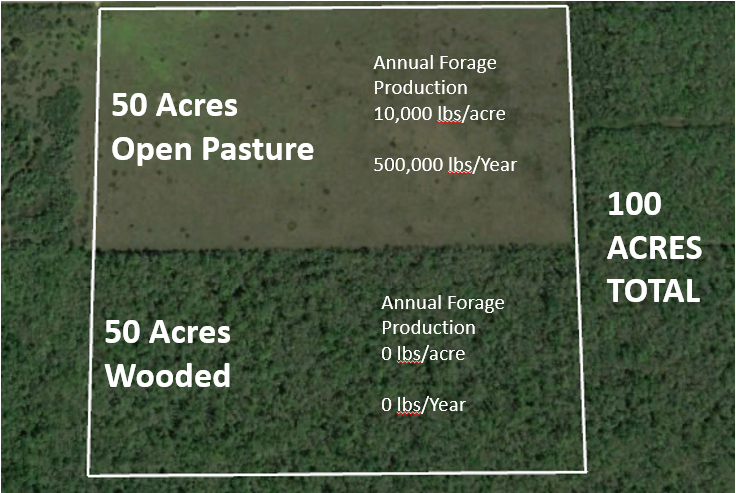 How many cows per acre in Texas? - Texas Landowners Association
Soil matters too. Deep, dark loam grows grass like a teenager grows feet. Sandy or rocky ground grows cactus, hope, and not much else. You can add fertilizer and irrigation, but your wallet will start crying softly.
Cows Aren’t All the Same Size
A fifteen-hundred-pound cow eats more than a nine-hundred-pound heifer. A bull is a whole different appetizer. And a mama cow with a calf at her side is basically an eating machine with a sidekick.
That’s why old-timers use Animal Units, or AUs. One AU equals one thousand pounds of cow. So a 1,200-pound cow is 1.2 AUs. A horse is often 1.25 AUs, mostly because horses are dramatic.
Rotational Grazing: The Cow Version of Airbnb
If you move cattle every few days, you can often run more animals per acre than if you let them roam the same patch all summer. The grass gets time to recover. The cows get fresh salad. Everybody wins, except the flies.
My neighbor Earl tried rotational grazing once. He moved his herd every morning, called it “cow yoga,” and complained that his boots never dried out. But his pasture looked fantastic by August. Even he admitted it, between sips of thermos coffee.
 USDA Cattle Inventory Report: State Rankings & Changes from 2022 Cattle
The Poop Test and Other Field Tricks
Want a quick read on your pasture? Look down. If you see more dirt than grass, you’ve got too many hooves. If the grass is tall and seeding out while cows look bored, you’ve got room for a few more.
Another trick: watch where cows graze. They eat the ice cream first—clover, young grass, tender weeds. Then they move to the broccoli—stems, older growth, stuff they’d rather not touch. If they’re forced to eat the broccoli all summer, you’re probably overstocked.
And yes, manure matters. Good grazing leaves dung patties scattered like dropped pancakes. Overgrazed ground has them piled in the same shady spot, because cows are creatures of habit and shade.
So, How Many Head Per Acre?
For a typical good pasture, think one cow-calf pair per 2 to 5 acres. For average unimproved land, maybe one per 5 to 10 acres. For dry rangeland, one per 20 to 100 acres is not crazy. For pure desert, just buy a cactus and call it a day.
The best move is to talk to your local extension agent, test your forage, and watch your grass. Your land will tell you if you’re overdoing it. Usually by turning into a Dust Bowl with cow prints.
And remember: the answer isn’t a fixed number. It’s a relationship. You, the rain, the soil, the grass, and a herd of animals that think fences are suggestions. Get that relationship right, and the acre will tell you exactly how many head it can handle.
